
When you see blood in your dog’s stool, your heart drops instantly, and I completely understand that reaction. I have seen many worried pet owners who walk through my clinic door with the same fear in their eyes.
Even a single episode of bloody diarrhea feels alarming because you cannot tell if it is a minor irritation or something serious. But the main concern is what to do readily when you see dog’s bloody diarrhea?
Let’s get through the causes of bloody diarrhea in dogs, the signs that tell you it is an emergency, and what you can safely do at home before you reach your veterinarian.
Dog bloody diarrhea is the presence of blood mixed with loose or watery stool, and it usually signals irritation, inflammation, or injury within the digestive tract.
The blood may appear bright red when it comes from the lower intestines or darker when it originates higher in the system. This condition can result from dietary mistakes, infections, parasites, stress, toxins, or more serious health problems.
Although some cases are mild, others can progress quickly and require urgent veterinary attention. Any dog showing bloody diarrhea should be monitored closely, and a veterinarian should be contacted if symptoms worsen or do not improve.
When your dog has bloody diarrhea, the appearance can tell us important details about where the issue started.
- Fresh red blood usually indicates irritation or injury in the lower part of the digestive tract. It includes the colon or rectum. It often appears bright and visible because it has not traveled far.
- Darker blood or stool that resembles coffee grounds usually signals bleeding higher in the digestive system. It becomes darker as it passes through the intestines and mixes with digestive fluids.
The digestive tract is sensitive and reacts quickly to infection, toxins, stress, or inflammation. When something irritates the lining, it releases fluid and triggers strong contractions. It leads to watery stool that may mix with blood or mucus.
Even a mild irritation can appear dramatic because the gut has many blood vessels. The amount of blood is not always a direct measure of severity, so it is important to observe other signs as well.
There are many possible causes of bloody diarrhea in dogs. Some are mild while others require urgent care. Here are the most common ones so you can compare them with what your dog is experiencing.
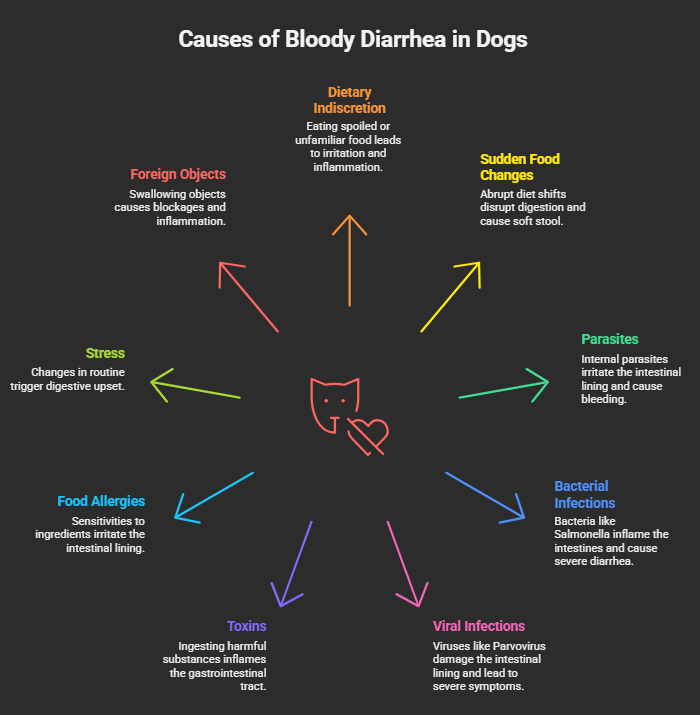
If you recognize any concerning patterns, it helps you decide how quickly to seek veterinary support.
1. Dietary Indiscretion
Dogs are curious eaters. When a dog eats something spoiled, fatty, or unfamiliar, the digestive tract reacts strongly. This irritation can lead to inflammation of the intestinal lining, which may produce blood in the stool.
I often see this after dogs raid the trash or pick up food from the ground. Although some cases settle quickly, others progress to more serious inflammation, so it is important to monitor your dog closely.
2. Sudden Food Changes
When you switch your dog’s food too quickly, the gut does not have time to adapt. This imbalance disrupts digestion and can cause soft stool or diarrhea that sometimes contains traces of blood.
Even high quality food can trigger trouble when introduced abruptly. I always advise gradual transitions to prevent unnecessary stress on the stomach and intestines.
3. Parasites in the Intestinal Tract
Internal parasites remain one of the most common causes of bloody diarrhea, especially in puppies or unvaccinated dogs. Parasites attach to the intestinal lining, causing irritation and small areas of bleeding.
Some dogs also experience weight loss, poor coat condition, or low energy. Regular deworming and stool testing are essential because parasites can hide for weeks before symptoms appear.
4. Bacterial Infections
Bacteria such as Salmonella or certain strains of E coli can enter the digestive tract through contaminated food, water, or surfaces. These bacterial diseases in dogs can inflame the intestines and sometimes lead to severe bloody diarrhea.
Dogs may also develop fever, vomiting, or noticeable discomfort. In these cases, medical treatment is important because bacteria can cause dehydration or spread within the body.
5. Viral Infections
Parvovirus is one of the most feared causes of bloody diarrhea in dogs. It typically affects puppies or unvaccinated dogs and progresses rapidly. The virus damages the intestinal lining, and leads to dark, bloody stool, vomiting, fever, and severe dehydration.
The key sign here is again fever in dogs and lethargic condition. Immediate veterinary attention is essential. Other viruses can also cause bloody diarrhea, though they tend to be milder with prompt care.
6. Toxins and Harmful Substances
Dogs who ingest toxic plants, chemicals, spoiled food, or human medications may develop bloody diarrhea as part of a broader toxic reaction. The gastrointestinal tract becomes inflamed as it attempts to expel the harmful substance.
Some toxins also affect the liver, kidneys, or nervous system, so quick action is important if you suspect exposure.
7. Food Allergies and Intolerances
Some dogs develop sensitivities to ingredients like chicken, beef, bacon, dairy products, or wheat. These reactions irritate the intestinal lining and may lead to intermittent diarrhea with streaks of blood.
Dogs with allergies often show skin symptoms as well, such as itching, ear infections, or redness. Identifying the trigger ingredient requires patience and careful diet trials.
8. Stress Related Digestive Issues
Stress affects dogs more than many owners realize. Changes in routine, boarding stays, loud events, or major household adjustments can trigger digestive upset known as stress colitis. This condition often produces stool coated with fresh red blood.
Thankfully, stress related diarrhea usually responds well to supportive care, although repeat episodes may require further investigation.
9. Foreign Objects
Dogs who swallow toys, bones, stones, or fabric can develop intestinal blockage or partial obstructions in other parts of digestive tract. These objects scratch or inflame the intestinal lining, resulting in bloody diarrhea.
Other symptoms usually include vomiting, straining, abdominal pain, or refusal to eat. Obstructions require immediate veterinary intervention.
Bloody diarrhea in dogs can become a real emergency. Although some mild cases resolve with supportive care, others signal a life threatening problem. Here, I explain the patterns and symptoms that indicate you should not wait.
If your dog shows any of the signs below, prompt veterinary attention greatly improves the outcome.
1. Continuous or Worsening Bloody Diarrhea
If your dog continues to pass bloody stool for more than a few hours or the amount of blood increases, it suggests active inflammation or injury inside the digestive tract. A mild irritation usually improves quickly. Persistent bleeding means the underlying issue is more serious and requires professional care.
2. Vomiting Combined With Bloody Diarrhea
When vomiting occurs at the same time as bloody diarrhea, the digestive system is under major stress. Dogs can lose fluids rapidly and become dehydrated within a short time. Vomiting in combination with blood in the stool may point to infection, toxin exposure, pancreatitis, or bowel obstruction. These conditions require veterinary treatment.
3. Weakness, Collapse, or Sudden Fatigue
A dog who becomes weak, refuses to stand, or shows sudden exhaustion may be experiencing significant fluid loss or internal imbalance. These symptoms are especially concerning when accompanied by diarrhea with blood. Immediate evaluation is essential to restore hydration and stabilize the dog.
4. Signs of Severe Abdominal Pain
Dogs experiencing intense intestinal discomfort may pace, pant, cry, or adopt unusual postures. You may see your dog stretching a lot, resisting being touched, or curling their body protectively. Pain along with bloody diarrhea may indicate pancreatitis, obstruction, twisting of the intestines, or severe infection.
5. Black Tarry Stool
If you see your dog poop black, it usually means the blood has been digested and originated from higher in the digestive tract. It is often more serious than fresh red blood. Conditions such as gastric ulcers, swallowed blood, or heavy bleeding in the stomach or small intestines can produce this appearance. Any dog with black tar like stool should be seen right away.
There are some simple things that you can do at home to support your dog suffering from bloody diarrhea while you arrange a veterinary visit. I usually recommend these tactics to the owners who tell me such a situation before visiting me.
These actions do not replace professional care, but they help stabilize your dog and prevent further irritation. Everything is safe for most dogs and helps reduce stress for both pet and owner during the waiting period.
1. Offer Small Sips of Water
When a dog has diarrhea, water loss happens quickly. Encouraging small, frequent sips of water helps prevent dehydration without overwhelming the stomach. Avoid letting your dog gulp large amounts at once because it can trigger vomiting in dogs. If you notice your dog refusing water entirely, this becomes a concern that requires veterinary attention.
2. Temporary Feeding Pause
A short break from food allows the digestive system to calm down. The gut works intensely during inflammation, and giving it a brief rest can reduce irritation. This pause should be short and followed by a gentle, easily digested meal once the stomach settles. If vomiting continues despite the pause, professional treatment is needed.
3. Simple Supportive Food
Once your dog seems a bit more stable, offering a plain meal such as boiled chicken with rice or boiled meat with pumpkin can help soothe the stomach. These foods are gentle and help firm the stool. If your dog refuses food for more than a day or seems uncomfortable, do not continue home care without veterinary guidance.
4. Reduce Stress and Physical Activity
Calming the environment helps dogs recover faster. Keep your dog in a quiet and comfortable space with soft bedding and low activity. Avoid long walks, play sessions, or travel during this time. Stress increases gut movement, and slowing things down helps the system return to normal.
5. Avoid Human Medications
Many human medications harm dogs, even when given in small amounts. Some common pain relievers and anti inflammatory medicines can cause stomach ulcers or dangerous bleeding. Never give medication without veterinary advice. If you have already given something by mistake, contact your vet immediately.
6. Monitor Stool and Behavior
Observe your dog carefully throughout the day. Note the color, frequency, and amount of stool because these details help your veterinarian assess the situation. Pay attention to changes in energy level, appetite, drinking habits, and comfort. Any sudden change in condition should be taken seriously.
Dog bloody diarrhea is not a simple thing like fever. It requires proper diagnosis of the underlying cause for better treatment. And for this purpose, some medical tests are quite necessary.
Many owners feel anxious when they hear that tests are needed, but each step has a purpose. I will explain the most common diagnostic tools, so you know exactly what to expect and why these tests are important.
1. Physical Examination
Your veterinarian will start with a full examination, which includes checking hydration, temperature, abdominal comfort, gum color, and overall alertness. These observations help us determine the severity of the condition and whether immediate stabilization is required before further tests.
2. Stool Testing
A fresh stool sample helps us detect parasites, bacteria, or irregularities. Many infections are not visible to the eye, so laboratory testing is essential. In puppies, we check for parvovirus as a priority because early diagnosis significantly improves survival.
3. Blood Work
Blood tests allow for evaluation of the immune response, hydration level, organ function, and possible inflammation markers. It is especially important when a dog shows weakness, vomiting, or dark, bloody stool.
4. Imaging
Ultrasound or X-ray imaging helps identify blockages, foreign objects, tumors, and abnormalities inside the digestive tract. These tools provide a clear picture of what is happening internally and allow your veterinarian to choose the most effective treatment plan.
Treatment of bloody diarrhea in dogs depends entirely on what triggered the problem, so the approach varies widely. When you understand these options, it helps you feel more confident and prepared during the visit.
Fluid Therapy
Dogs with diarrhea and vomiting lose large amounts of water and electrolytes. Fluid therapy restores balance quickly and supports blood flow to vital organs. Fluids may be given under the skin or directly into the vein, depending on the severity.
Medications for Infection or Inflammation
If bacteria, parasites, or viruses are involved, targeted medication is required. It may include antiparasitic drugs, antibiotics, antinausea medication, or intestinal coating agents. These medicines help calm inflammation and eliminate the underlying cause.
Diet Modification
A gentle prescription diet supports healing during the recovery phase. These diets contain easily digested ingredients and fiber that helps normalize gut movement. Your veterinarian may recommend feeding this diet for a few days or several weeks depending on the condition.
Surgery for Obstructions
If imaging shows an obstruction or foreign object, surgery becomes necessary. Leaving the obstruction untreated can lead to tissue death or rupture of the intestines. Early surgery usually results in a smooth recovery.
Prevention is always easier than treatment, and small routine habits make a significant difference. So, I am explaining how you can protect your dog from future episodes of bloody diarrhea.
- Safe Feeding Habits: Feeding high quality food and avoiding sudden changes helps protect the digestive tract. Introduce new ingredients slowly and monitor your dog during transitions. Keep trash bins secure and discourage scavenging during walks.
- Regular Parasite Control: Routine deworming and yearly stool checks protect your dog from hidden intestinal parasites. Even healthy adult dogs benefit from regular parasite control, especially those who spend time outdoors or interact with other animals.
- Vaccination: Vaccines protect dogs from dangerous viral infections such as parvovirus. Following a proper vaccination schedule gives your dog strong immune defense and reduces the risk of severe bloody diarrhea.
- Stress Management: Helping your dog cope with stressful events can reduce episodes of stress related colitis. Provide a calm environment, maintain a predictable routine, and introduce changes gradually.
Bloody diarrhea in dogs is one of those symptoms that grabs your attention instantly, and it should. While some causes are mild and resolve quickly with proper care, others require rapid veterinary attention.
You can act with confidence and protect your dog’s health by understanding the possible causes, recognizing emergency signs, and knowing what steps to take at home. Trust your instincts and do not hesitate to seek professional help when something feels wrong.
Your quick action can make a real difference in your dog’s comfort and safety, and I am always here to support you every step of the way.
