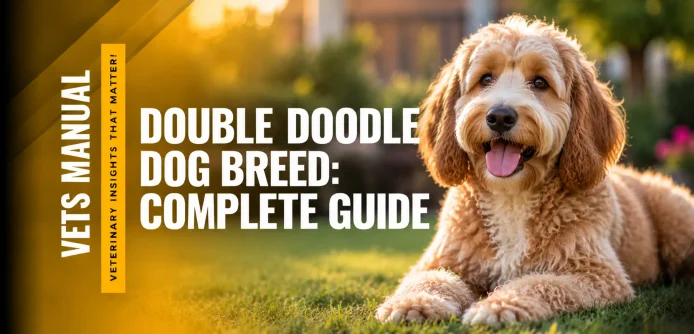
The Double Doodle is a popular choice for families looking for an intelligent, affectionate, and playful companion.
With its curly coat and friendly personality, this dog often attracts people who love the appearance of Poodles and the gentle nature of Golden Retrievers and Labradors. However, there is more to this crossbreed than its adorable appearance.
Being having a veterinary background, I believe understanding a dog’s genetics, grooming requirements, exercise needs, and potential health problems is essential before bringing one home.
In this guide, I will explain everything you need to know about the Double Doodle dog breed.
Key Takeaways
Thinking about bringing home a Double Doodle? Understand its temperament, grooming needs, expected costs, and health considerations before choosing one.
A Mix of Three Popular Breeds
Double Doodles usually combine Poodle, Golden Retriever, and Labrador Retriever ancestry. Their size, coat, and appearance can vary considerably.
Friendly, Intelligent, and Active
Many Double Doodles enjoy family activities and learn well with positive reinforcement. Daily exercise, mental stimulation, and consistent training are important.
Budget for Purchase and Care
The article lists estimated monthly expenses of $180 to $495. Food, professional grooming, preventive care, and unexpected veterinary bills can add up.
Grooming Requires Regular Attention
Brush the coat several times a week, check ears and paws regularly, trim nails as needed, and maintain dental care. Curly coats may need frequent professional grooming.
Inherited Health Risks Still Matter
Potential concerns include hip and elbow dysplasia, inherited eye disorders, and ear infections. Crossbreeding does not eliminate genetic health risks.
Choose a Responsible Breeder
Ask for documented health testing of both parents, review their health records, and confirm that you can provide balanced nutrition, exercise, training, and routine veterinary care.
What Is a Double Doodle?
A Double Doodle is a crossbreed developed by combining two popular Poodle mixes, usually a Goldendoodle and a Labradoodle. These dogs typically inherit traits from Poodles, Golden Retrievers, and Labrador Retrievers, although their appearance, temperament, and coat characteristics can vary considerably.
| Parameters | Typical Characteristics |
|---|---|
| Breed type | Designer crossbreed |
| Parent breeds | Poodle, Golden Retriever, and Labrador Retriever |
| Height | Approximately 20 to 29 inches |
| Adult weight | Around 30 to 80 pounds |
| Lifespan | Approximately 10 to 15 years |
| Temperament | Friendly, intelligent, playful, and affectionate |
| Coat | Wavy, curly, or sometimes straighter |
| Common colors | Cream, gold, apricot, brown, black, and combinations |
| Exercise requirements | Moderate to high |
| Grooming requirements | High, particularly for curly coats |
| Common health concerns | Hip dysplasia, ear infections, eye disorders, and inherited conditions |
| Diet | Complete and balanced dog food appropriate for age and size |
Note: These figures are general estimates, not guaranteed breed standards. Because Double Doodles are not a standardized purebred breed, individual dogs may fall outside these ranges.
What Does a Double Doodle Look Like?
A Double Doodle generally has a soft, wavy or curly coat, floppy ears, expressive eyes, and a friendly facial appearance. Its body is usually athletic, with a moderately long muzzle and a feathered tail. Coat color and texture vary with inherited genes.
How Big Does a Double Doodle Get?
Most Double Doodles reach approximately 20 to 29 inches in height and weigh 30 to 80 pounds as adults. Their final size depends on the sizes of their Poodle, Golden Retriever, and Labrador Retriever ancestors, as well as individual genetics.
What Is a Mini Double Doodle?
A Mini Double Doodle is a smaller version bred using smaller parent dogs, often involving a Miniature Poodle somewhere in the lineage. These dogs may weigh approximately 15 to 40 pounds, although sizes vary. Always ask the breeder about the parents’ adult weights and health testing.
How Much Is a Double Doodle?
A Double Doodle is generally priced at $100 to $500 for a puppy and $1,500 to $3,500 for the adult.
The price of a Double Doodle depends on the:
- Breeder
- Location
- Parental health testing
- Puppy demand
- Coat characteristics
- Early veterinary care
Reputable breeders may charge more because they invest in health screening, appropriate puppy socialization, and veterinary examinations.
One-Time Expenses
Below are the one-time expenses you may have to spend when bringing a Double Doodle home.
| Items | Estimated Cost |
|---|---|
| Puppy purchase | $1,500 to $3,500 or more |
| Adoption or rehoming fee | $100 to $350 (Varies by organization) |
| Initial veterinary examination | $50 to $150 |
| Vaccination and preventive care | $75 to $250 |
| Crate, bed, bowls, and leash | $100 to $300 |
| Grooming tools | $30 to $100 |
| Training classes | $100 to $300 |
| Fencing or secure yard improvements | $200 to $2,000 or more |
| Microchip, where not already provided | $25 to $60 |
Note: Before paying a deposit, I recommend checking the breeder’s reputation and requesting documented health screening for the parents.
Monthly Expenses to Pet a Double Doodle
The monthly cost of keeping a Double Doodle depends on:
- Adult size
- Food quality
- Grooming frequency
- Veterinary needs
- Country you live in
In my view, owners should budget for routine care as well as unexpected medical expenses before bringing home a dog.
| Expenses | Estimated Monthly Cost |
|---|---|
| Complete dog food | $50 to $120 |
| Treats and training rewards | $10 to $30 |
| Professional grooming | $40 to $100 |
| Routine veterinary care allowance | $20 to $60 |
| Parasite prevention | $15 to $40 |
| Toys and enrichment | $10 to $25 |
| Shampoo and basic supplies | $5 to $20 |
| Pet insurance | $30 to $100 |
| Estimated total | $180 to $495 |
Is a Double Doodle Affordable to Maintain?
A Double Doodle can be expensive to maintain because of its food requirements, coat care, and potential veterinary costs. That’s the reason you should keep an emergency fund and obtain insurance quotes before purchasing the dog.
If your budget is limited, consider adoption, home brushing, and preventative care without compromising nutrition or essential veterinary treatment.
How Is the Temperament of a Double Doodle Dog?
Double Doodles are generally bred for companionship, intelligence, and a sociable disposition. Many enjoy spending time with people and participating in family activities. However, temperament is influenced by:
- Genetics
- Early experiences
- Socialization
- Training
So you should never assume that every Double Doodle will behave identically. In the under section, I have provided details on the temperament of the Double Doodle dog, per my experience with them.
1. Intelligence and Trainability
Double Doodles often inherit the learning ability of Poodles and the responsiveness of retrievers. They can learn basic obedience, household rules, and useful commands relatively quickly when training is consistent.
I recommend positive reinforcement using small food rewards, praise, and play. Short sessions are usually more effective than repetitive and lengthy drills. Teach essential commands such as sit, stay, come, leave it, and walking calmly on a leash.
Avoid harsh punishment. It can increase fear and interfere with the trust needed for effective training.
2. Affection and Family Compatibility
Many Double Doodles form strong bonds with their families. They may enjoy:
- Cuddling
- Playing
- Accompanying owners on walks
- Participating in everyday activities
Their friendly nature can make them suitable for households with children when the dog has a stable temperament, and interactions are supervised.
Children should learn not to pull the dog’s ears, disturb it while eating, or approach it when sleeping. Even a gentle dog can react defensively if frightened or hurt.
3. Interaction With Other Pets
Double Doodles can coexist well with other dogs and, with appropriate introductions, some cats. Their retriever ancestry may contribute to chasing or retrieving behaviors, although individual prey drive varies.
I initially recommend:
- Gradual introductions
- Supervised interactions
- Separate feeding areas
Never leave a new dog unsupervised with a small animal until you have established that the arrangement is safe.
4. Energy Levels and Mental Stimulation
Double Doodle dogs often have moderate to high energy levels. A short walk around the block may not be enough for an active adult, particularly when the dog inherits the athletic characteristics of its retriever ancestors.
Daily walks, interactive play, scent games, and obedience exercises help meet their physical and mental needs. Puppies require age-appropriate activity rather than prolonged forced running or repetitive high-impact exercise while their joints are developing.
5. Separation Anxiety and Barking
Because Double Doodles often enjoy human company, some may struggle when left alone for long periods. Signs of separation-related distress can include:
- Persistent barking
- Destructive behavior
- Pacing
- Attempts to escape
That’s why I always suggest teaching the dog to remain comfortable alone for short periods, providing safe enrichment toys, and maintaining a predictable routine. Also, you should teach your dog to respect fence boundaries to avoid great escapes.
Punishing a distressed dog is unlikely to solve the underlying problem. Persistent or severe symptoms may require veterinary assessment and a qualified behavior professional.
How to Groom the Double Doodle Dog Breed?
Double Doodles can have wavy, curly, or relatively straight coats. Curly coats may trap loose hair and form mats, while straighter coats may shed more noticeably. I advise owners to choose a grooming routine based on the individual dog’s coat rather than assuming that every Double Doodle is low shedding.
1. Brushing and Preventing Mats
Brush your Double Doodle several times a week, ideally daily if the coat is long, dense, or prone to tangling.
Pay particular attention to areas such as:
- Behind the ears
- Under the collar
- Around the armpits
- Between the legs
- Beneath the tail
These areas commonly develop mats because of friction and moisture.
A slicker brush and a suitable metal comb can help remove tangles. Work gently from the ends of the hair toward the skin. If a mat is tight against the skin, seek professional grooming rather than pulling it painfully or cutting close to the skin with scissors.
2. Bathing and Coat Trimming
Most Double Doodles need a bath every 4 to 6 weeks, although the appropriate frequency depends on:
- Coat condition
- Activity
- Skin health
You should always use a dog-specific shampoo and rinse thoroughly to prevent irritation.
Professional grooming every 6 to 8 weeks is a reasonable starting point for many curly coated dogs. Some may need appointments more frequently, especially when their coats grow quickly.
Tell the groomer whether you prefer a shorter practical trim or a longer coat. Keeping the coat shorter can reduce matting, but it does not eliminate the need for brushing.
3. Ear Cleaning
Floppy ears and moisture retention can increase the risk of ear problems in some dogs. Check the ears weekly for redness, odor, discharge, or excessive wax.
Clean only when necessary with a veterinary-recommended ear cleaner. Avoid inserting cotton swabs deep into the ear canal. If the dog repeatedly shakes its head, scratches its ears, or shows pain, arrange a veterinary examination instead of relying on home cleaning.
4. Dental Care
Dental care is essential regardless of breed. You should brush your Double Doodle’s teeth daily using a dog-specific toothbrush and toothpaste whenever possible.
Dental chews approved for dogs may provide additional support, but they should not replace brushing. Arrange professional dental assessment when recommended, especially if you notice:
- Bad breath
- Red gums
- Difficulty chewing
- Visible tartar
5. Nail Trimming and Paw Care
Check the nails every few weeks and trim them as needed. Overgrown nails can alter foot posture and cause discomfort during walking.
Inspect the paw pads for cuts, swelling, foreign material, or irritation. If you walk your dog on hot pavement, check the ground temperature and choose cooler walking times to prevent burns.
Double Doodle Caring Tips for Better Growth
Good care supports healthy development, a stable temperament, and long-term wellbeing. I specifically tell dog parents to focus on nutrition, preventive veterinary care, appropriate exercise, and consistent training rather than relying on supplements or expensive products.
Below, I have listed some practical caring tips for your Double Doodle so they can have better growth.
- Feed a Balanced Diet: Choose complete and balanced dog food suitable for the dog’s age, size, and activity level.
- Measure Portions: Adjust food according to body condition and growth rather than feeding unlimited quantities.
- Provide Fresh Water: Keep clean drinking water available throughout the day.
- Schedule Vaccinations: Follow a veterinarian’s vaccination plan based on age, location, lifestyle, and local disease risks.
- Maintain Parasite Prevention: Discuss suitable flea, tick, and intestinal parasite control with your veterinarian.
- Exercise Consistently: Combine daily walks with play and mental enrichment, adjusting activity to age and fitness.
- Socialize Early: Introduce the puppy gradually to people, sounds, environments, and other suitable animals.
- Train with Patience: Use rewards and consistent household rules to encourage desirable behavior.
- Monitor Body Condition: Check weight regularly and seek advice if the dog becomes overweight or loses weight unexpectedly.
- Arrange Routine Examinations: Regular veterinary visits help identify dental disease, skin problems, joint issues, and other conditions early.
Health Problems to Watch For
Double Doodles may inherit health risks associated with their parent breeds. Possible concerns include:
- Hip dysplasia
- Elbow dysplasia
- Progressive retinal atrophy
- Certain other inherited eye disorders
- Ear infections
Some may also develop skin allergies, digestive problems, or other conditions unrelated to their ancestry.
Crossbreeding does not guarantee freedom from inherited disease. Before purchasing a puppy, ask for documented, breed-appropriate health testing of both parents. Depending on their ancestry, this may include hip and elbow evaluations, eye examinations, and relevant genetic tests.
Seek veterinary attention for persistent lameness, eye changes, recurrent ear infections, unexplained weight changes, or ongoing digestive symptoms. Early assessment is generally preferable to waiting for a problem to become severe.
Let’s Rewind
The Double Doodle can be a wonderful companion for owners who have time for:
- Training
- Exercise
- Grooming
- Regular veterinary care
Its intelligence and affectionate personality are appealing, but its coat, energy level, size, and inherited health risks deserve careful consideration. As I advise prospective dog owners, choosing a pet should involve more than appearance or popularity.
Research the breeder, examine the parents’ health records, and prepare a realistic long term budget before making a commitment. With responsible ownership, appropriate nutrition, preventive healthcare, and consistent attention, a Double Doodle can enjoy a healthy and rewarding life with its family.