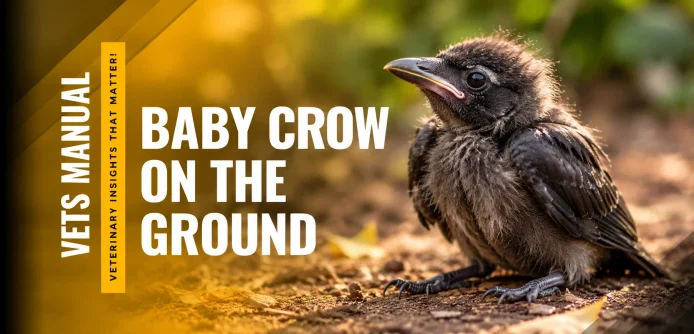
You just found a baby crow on the ground and your heart is racing. Is it hurt, abandoned, or calling for help? Should you touch it, move it, or leave it alone? I hear these questions almost daily in my clinic, and I understand the panic completely.
As a veterinary practitioner, I have seen well meaning people accidentally harm healthy chicks while trying to save them. So let us slow down together. I will take you through exactly how to identify a baby crow, assess its safety, and decide the right next step with confidence and care.
Key Takeaways
Finding a baby crow on the ground does not always mean it needs rescuing. Identify its age, assess its condition, and act only when necessary.
Identify Nestlings and Fledglings
Nestlings have few feathers and cannot stand or hop, while fledglings are feathered and may be learning to move and fly.
Grounded Does Not Mean Abandoned
Adult crows often continue feeding and protecting fledglings on the ground. Observe quietly from a safe distance before intervening.
Check for Signs of Injury
Bleeding, a drooping wing, inability to stand, unusual weakness, or a known cat or dog attack requires prompt professional help.
Move It Only When Necessary
If the bird faces immediate danger from traffic, pets, or exposure, gently move it a short distance to a safer nearby spot.
Never Feed It Without Expert Advice
Bread, milk, and unsuitable foods can cause harm. Avoid offering food or water unless a qualified wildlife professional instructs you.
Contact a Wildlife Rehabilitator
Injured, cold, limp, or unresponsive birds need professional assessment. Keep a bird requiring transport warm, dark, and quiet in a ventilated box.
What to Do if You Find a Baby Crow on the Ground?
If you find a baby crow on the ground, do not assume it is abandoned. Many young crows leave the nest before they can fly well and are still being cared for by their parents. Your first job is observation, not rescue.
Look for injuries, feather development, and nearby adult crows. If the bird is alert and hopping, it usually needs space, not help. If it is injured, cold, or attacked by a predator, professional wildlife help is needed.
How Can You Identify a Baby Crow in the Field?
When someone brings a bird to my clinic or sends me photos in a panic, the very first thing I do is confirm whether it is actually a baby crow. Many fledgling birds look similar, and misidentification often leads to the wrong care decisions.
Physical Features That Distinguish Baby Crows
A young crow has some very specific traits that help set it apart from other birds.
Baby crows are larger than most songbird chicks, even at a young age. Their bodies look slightly oversized compared to their legs, and their beaks are thick and strong. You may notice pale or pinkish edges at the corners of the beak, especially in younger chicks. It is called a gape, and it is a normal feature.
Their feathers are often dull black or charcoal rather than glossy black. Fully grown crows have a shine to their feathers, while babies look a bit fuzzy or unfinished.
Differences Between Nestlings and Fledglings
This distinction is critical, and I wish more people knew it.
Nestlings are very young. They have little to no feathers, closed or partially open eyes, and cannot stand or hop. If you find a nestling on the ground, it usually needs intervention.
Fledglings are older. They are fully feathered but may have short tails and awkward movement. They hop, flap, and sometimes scream loudly. These birds are meant to be on the ground temporarily. In most cases, they are being watched closely by their parents.
Common Birds Mistaken for Baby Crows
I often see people confuse baby crows with ravens, grackles, or even young mynas.
- Grackles are slimmer with longer tails and lighter eyes.
- Ravens are much larger with heavier beaks.
- Mynas have yellow facial skin and behave very differently.
Correct identification prevents unnecessary rescue and stress for the bird.
Why Are Baby Crows Often Found on the Ground?
Baby Crows are found on the ground because in crow society, it is a normal fledging process and a parenting tactic, not abandonment.
The Natural Fledging Process Explained
Crows do not go straight from nest to perfect flight. There is an awkward learning phase where young birds leave the nest and spend days on the ground or low branches. During this time, they build muscle strength and coordination.
Parent crows are usually nearby, bringing food and standing guard. They may even scold you loudly if you get too close. That yelling is actually a good sign.
How Crow Parenting Works in the Wild?
Crows are highly intelligent and social birds. Families often include older siblings who help raise the young. When a fledgling is on the ground, it is rarely alone in a true sense.
I once observed a fledgling crow outside my home hopping clumsily near a parking lot. Within minutes, two adult crows and another juvenile appeared, coordinating calls and positioning themselves between the chick and passing people. That bird did not need rescuing. It needed space.
When Grounded Does Not Mean Abandoned?
This is where most mistakes happen. People assume that no nest equals no parents. In reality, crow nests are often high and hidden. Parents may leave briefly to find food and return once humans step away.
A good rule is this. If the baby crow looks alert and uninjured, watch quietly from a distance for at least one to two hours.
How to Assess If the Baby Crow Needs Help?
Now we get to the most important decision point. Does this baby crow truly need intervention?
Signs the Baby Crow Is Healthy and Safe
A healthy fledgling crow will be upright, responsive, and vocal. It may hop, flap, or attempt short flights. Its eyes are open and clear. The body feels warm, not cold.
You may see adult crows nearby calling, diving, or watching you. That means the family is present.
In these cases, your best help is to gently move the bird away from immediate danger, such as traffic or pets, and then leave the area.
Red Flags That Indicate Immediate Danger
There are situations where waiting is not appropriate.
If the baby crow is bleeding, has a drooping wing, cannot stand, or is covered in ants or flies, it needs professional help. A cold, limp, or unresponsive bird is also in trouble.
Another major red flag is a known cat or dog attack. Even small puncture wounds can be fatal due to infection.
Environmental Risks You Should Consider
Look around carefully. Is the bird in the middle of a road, near heavy foot traffic, or exposed to extreme heat or rain? Sometimes the bird is healthy but the location is not.
In those cases, moving the bird a short distance to a shaded, safer spot nearby is appropriate.
How to Rescue a Baby Crow? What I Recommend You Do Step by Step
To rescue a baby crow, you should first observe it, and if it looks unhealthy, you should protect it.
When people call me about a baby crow, I advise them a calm and structured approach, which is:
Step 1: Observe Before You Act
I know this is hard. The instinct to rescue is strong. But observation prevents harm.
Watch from a distance. Use binoculars if you have them. Note behavior, posture, and adult bird activity. Set a timer for at least sixty minutes.
Step 2: Protect Without Interfering
If the bird is in immediate danger, gently move it a few feet to safety. Use gloves or a towel. Place it under a bush or low tree, not inside a box unless absolutely necessary.
Do not take it indoors unless it is clearly injured.
Step 3: Know When to Call for Help
If the bird shows injury, weakness, or has been attacked, contact a licensed wildlife rehabilitator immediately. Local animal control or wildlife rescue groups can guide you.
For related reading, see our guide on what to do if you find an injured wild bird.
What You Should Not Do With a Baby Crow?
Feeding a baby crow, keeping them overnight without proper care, is often risky. These actions, though well-intentioned, can cause serious harm.
Why Feeding the Crow Is Risky?
Baby crows have specific dietary needs. Bread, milk, or pet food can cause choking, malnutrition, or aspiration pneumonia.
I have seen birds in my clinical practice with severe digestive issues simply because someone fed them the wrong food for one afternoon.
Why Keeping It Overnight Is a Bad Idea?
Crows imprint easily. Even short periods of human care can reduce their chances of surviving in the wild. They may lose fear of people or fail to integrate back into their family group.
Common Myths That Cause Harm
Touching a baby crow does not make parents abandon it. That is a myth. However, unnecessary handling increases stress and injury risk.
Rescuing too soon is often more dangerous than waiting.
When You Should Take Baby Crows to a Professional Rehabilitation?
You should take the baby crow to a professional rehabilitation if it is suffering from severe injuries.
Sometimes intervention is necessary, and knowing when to act can save a life.
Injuries That Require Immediate Care
Broken wings, visible fractures, deep wounds, and neurological signs such as head tilting all require professional treatment.
Wildlife rehabilitators have the training and permits needed to provide appropriate care.
How to Transport a Baby Crow Safely?
You should transport the bird after placing it in a ventilated box lined with a soft cloth. Keep it warm, dark, and quiet. Do not offer food or water unless instructed.
Legal and Ethical Considerations
In many regions, it is illegal to keep wild birds without a permit. Beyond the law, the goal is always release back to the wild, not ownership.
Let’s Rewind
Finding a baby crow on the ground can be alarming, and your concern already tells me you care deeply. In most cases, that little bird is not abandoned or helpless. It is simply learning how to be a crow.
By observing carefully, avoiding rushed rescue, and knowing when professional help is truly needed, you become part of the solution rather than the problem. I have seen countless healthy fledglings thrive because someone chose patience over panic.
When in doubt, pause, watch, and seek expert advice. Sometimes, the kindest help is stepping back and letting nature do what it does best.