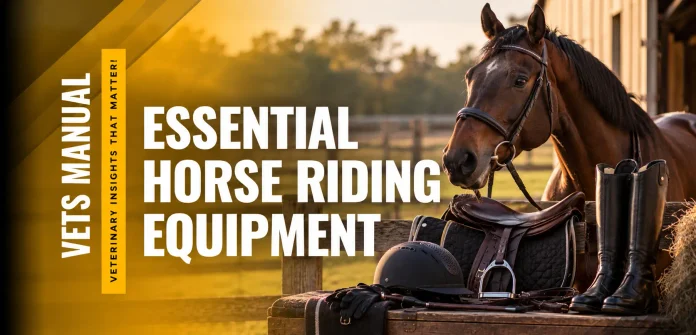
When I meet new riders in my veterinary practice, one of the first things I notice is confusion around riding equipment. Horse riding is not just about getting into the saddle and hoping for the best. The right equipment protects you, supports your horse’s comfort, and helps you communicate clearly without causing stress or pain.
Beginners often buy gear based on appearance or advice from non-professionals, which can lead to discomfort or even injury. In this guide, I will list essential horse riding equipment every beginner should carry and explain why each item matters from both a veterinary and practical riding perspective.
Key Takeaways
The right horse riding equipment helps beginners stay safe, maintain balance, and protect their horse from discomfort and injury.
Never Skip a Riding Helmet
Choose a certified helmet that fits securely and stays stable during movement to help protect your head in a fall.
Wear Proper Boots and Riding Pants
Riding boots with suitable heels help prevent your foot from slipping through the stirrup, while breeches reduce friction and chafing.
Prioritize Saddle Fit
A well-fitted saddle distributes weight more evenly and helps prevent back pain, pressure points, and muscle soreness in your horse.
Use Gentle, Clear Communication
A properly fitted bridle, suitable bit, gloves, and responsible crop use support consistent cues without unnecessary pressure.
Consider Extra Body Protection
A suitable body protector can provide additional protection during falls, particularly when learning or riding on trails.
Carry Grooming and First Aid Supplies
Grooming tools help identify skin problems before riding, while water and basic first aid supplies help you prepare for common needs.
Why Proper Riding Equipment Matters for Beginners?
Before we talk about specific items, it is important to understand why correct riding equipment plays such a crucial role, especially when you are just starting out.
Being a veterinarian, I often get approached by riders who got injured during horse riding, and I see many avoidable problems caused by poor gear choices. Ill-fitting equipment can lead to muscle soreness, back pain, mouth injuries, and behavioral issues in horses.
Proper riding equipment supports balanced riding, reduces strain on your joints, and ensures humane communication with the horse. Horses are sensitive animals. Even small pressure points from incorrect tack can cause stress and resistance.
Essential Horse Riding Equipment Every Beginner Should Carry
For beginners, good equipment also builds confidence. When you feel secure and comfortable, your body language becomes calmer, and your horse responds better. You can consider riding equipment as a partnership tool rather than a control mechanism.
Below are the essential horse riding equipment every beginner should carry.
1. Riding Helmet
A riding helmet is non negotiable for beginners, regardless of riding discipline or experience level. Head injuries remain one of the most serious risks in equestrian sports, and I strongly advise every rider to make helmet use a habit from day one.
Why a Certified Helmet Is Essential?
A proper riding helmet is designed to protect your skull during falls and sudden impacts. Unlike casual headgear, equestrian helmets are tested to absorb shock and reduce rotational forces. As a vet, I have witnessed cases where helmets prevented severe trauma. Beginners are still developing balance and reflexes, making falls more likely.
A certified helmet should fit snugly without pressure points and remain stable when you move your head. It should not rock forward or backward. Ventilation is also important, especially in warm climates, to prevent overheating during long rides.
2. Riding Boots
Riding boots are another critical piece of equipment that beginners often underestimate. Wearing regular shoes or sneakers while riding can be dangerous and uncomfortable.
How Riding Boots Protect Both Rider and Horse?
Riding boots provide ankle support and prevent your foot from slipping through the stirrup. This is essential for safety, as trapped feet during a fall can cause serious injuries. The smooth sole allows quick release, while the slight heel keeps your foot in the correct position.
From a veterinary perspective, stable leg position improves balance and reduces accidental pressure on the horse’s sides. It helps the horse respond calmly rather than reacting to inconsistent cues. Proper boots also protect your legs from rubbing and pinching caused by saddle movement.
3. Comfortable Riding Pants or Breeches
Many beginners start riding in jeans, but this often leads to discomfort and skin irritation. Riding pants or breeches are specifically designed for long hours in the saddle.
Why Specialized Riding Pants Matter?
Riding pants reduce friction and provide flexibility, allowing you to move naturally with the horse. Seams are positioned to prevent chafing, and the fabric stretches to support proper posture. Knee patches or full seat designs improve grip, which is especially helpful for beginners still learning balance.
From a horse’s point of view, smoother leg contact creates clearer signals. Sudden movements caused by discomfort can confuse the horse and disrupt rhythm. Proper riding pants help maintain steady communication and rider confidence.
4. Well Fitted Saddle
The saddle is one of the most important pieces of riding equipment, yet it is often misunderstood by beginners. A poorly fitted saddle can cause long term damage to a horse’s back.
Understanding Saddle Fit and Comfort
A good saddle distributes weight evenly across the horse’s back, preventing pressure sores and muscle strain. As a veterinarian, I often treat horses with back pain linked directly to ill fitting saddles. Beginners may not recognize subtle signs of discomfort, such as ear pinning or resistance.
For riders, a well fitted saddle provides stability and encourages proper posture. It helps you sit correctly without gripping or leaning excessively. Investing time in saddle fitting benefits both horse welfare and riding progress.
5. Bridle and Bit
The bridle and bit form the primary communication channel between rider and horse. Beginners should approach this equipment with care and understanding rather than force.
Choosing Gentle and Appropriate Headgear
A properly fitted bridle should sit comfortably without rubbing or pinching. The bit should rest gently in the horse’s mouth without causing pressure points. Harsh or poorly fitted bits can lead to mouth injuries, head shaking, and resistance.
As a vet, I always remind riders that communication should be subtle and respectful. Beginners benefit from simple, mild bits that encourage learning rather than punishment. Soft hands combined with correct equipment build trust and responsiveness.
6. Riding Crop
Many beginners are unsure about carrying a riding crop, often due to misconceptions. When used correctly, a riding crop is a communication aid rather than a tool for punishment.
Purpose of a Riding Crop
A riding crop helps reinforce leg cues, especially for horses that are still learning or lack responsiveness. It should never be used out of frustration or anger. In my veterinary experience, misuse causes stress and behavioral issues rather than improved performance.
If you want a deeper educational explanation, you can refer to the article “What Is a Riding Crop” on your website, which explains proper use, types, and ethical considerations in detail. Beginners should focus on light, precise cues that support training without causing fear.
7. Gloves for Better Rein Control
Riding gloves may seem optional, but they provide several practical benefits, particularly for new riders.
How Gloves Improve Comfort and Communication?
Gloves protect your hands from blisters and improve grip on the reins. This helps maintain consistent contact without pulling or jerking. From a veterinary standpoint, steady rein contact prevents sudden pressure in the horse’s mouth.
Cold weather riding also makes gloves essential, as numb fingers reduce control. Well fitted gloves allow smooth rein adjustments and improve overall confidence, especially during longer sessions or challenging conditions.
8. Body Protector or Safety Vest
While not mandatory for all disciplines, a body protector is a wise choice for beginners, especially during early training or trail riding.
Extra Protection for Learning Riders
A body protector cushions your torso during falls and reduces the risk of bruising or internal injury. Beginners are still learning balance, transitions, and emergency reactions, which increases fall risk.
From my experience, riders who feel protected ride more calmly. Reduced fear leads to smoother movements, which benefits the horse as well. Safety equipment supports learning without unnecessary anxiety.
9. Grooming Kit
Every beginner rider should carry basic grooming tools. Grooming is not just about cleanliness but also about health monitoring.
Why Grooming Is Part of Riding Equipment?
Regular grooming allows you to check for cuts, swelling, or skin irritation before riding. As a veterinarian, I consider grooming a daily health assessment opportunity. Dirt or debris under tack can cause sores and discomfort.
For beginners, grooming builds a bond with the horse and teaches observation skills. A calm grooming routine prepares the horse physically and mentally for riding, improving cooperation and comfort.
10. Water and Basic First Aid Supplies
Beginners often forget practical essentials like hydration and first aid items, especially during long sessions or outdoor rides.
Being Prepared for Horse and Rider Needs
Carrying water helps prevent dehydration for both rider and horse. Basic first aid supplies allow quick response to minor cuts or scrapes. From a veterinary perspective, immediate care reduces infection risk and promotes faster healing.
Prepared riders are calmer and more confident. Horses sense this confidence, which positively influences behavior and trust during rides.
Let’s Rewind
As a veterinarian, I always remind beginner riders that good equipment supports safety, comfort, and ethical horsemanship. Riding gear is not about control or appearance but about clear communication and mutual trust.
Each item you carry, from helmet to grooming tools, plays a role in protecting both you and your horse. When equipment fits properly and is used with care, horses move more freely and riders learn faster.
Take time to choose quality gear, seek professional advice, and observe your horse’s responses. Thoughtful preparation builds confidence, prevents injury, and creates a healthier, more enjoyable riding experience for everyone involved.