

Yes. And, it surprises many cat parents just like you.
You are thinking, “My cat never goes outside. So how could she possibly get fleas?” I get that question all the time in my clinic. It feels unfair, doesn’t it? You keep your home clean, you do not let your cat roam outdoors, and still, she is scratching her neck.
As a vet, I have seen fleas show up in the cleanest homes and on the most pampered indoor cats. The truth is, fleas are sneakier than we give them credit for. And once they are in, they don’t go quietly. Let’s unpack how and why it happens, and what you can do about it.
Sadly, but honestly, “YES.” Indoor cats get fleas maybe through owners, other pets, environment, or random visitors.
Being a veterinarian, I know owners are usually worried about viral infections or bacterial diseases in cats and want to treat them if occur. However, the fact is, fleas are equally dangerous for felines. They weakens the immune system of pets and make them susceptible to acquire secondary infection as well.
Even if your cat never steps a paw outside, fleas can still find their way in. There are many hidden paths fleas take to infest even the most secure indoor environments. Knowing these access points is key to preventing future infestations and understanding why no cat is truly immune.
1. Fleas Hitchhike on Humans and Other Pets
Fleas are tiny but smart. They often latch onto pant legs, shoes, or even jackets when you have been outside.
If you have been around a dog park, vet clinic, garden, or simply brushed up against a bush that had an infested stray animal pass by, congratulations, you could have brought back unwanted guests.
2. They Come In Through Doors, Windows, and Screens
You would be surprised how many times I have seen fleas sneak in through open windows or poorly sealed doors.
Fleas are jumpers. If your window screens have even small holes, especially on lower floors, fleas can hop right in from nearby vegetation. Some cases even start because the house had a rodent issue, rats or mice can carry fleas that end up on your cat.
3. Visiting Pets or People May Be Carriers
If friends or relatives bring their dog over, or even if someone visits after being around animals, fleas can transfer via their clothing or pet’s fur.
I once treated an indoor cat for fleas just because their owner had babysat a neighbor’s dog for a weekend. That was all it took.
Now that you know fleas can make it into your home, the next step is spotting them early. Many cat owners miss the signs because fleas can be sneaky and their symptoms are not always obvious.
So, I always help pet owners identify flea trouble before it becomes a full-blown infestation with these tactics:
- Increased Scratching or Grooming Behavior: If your cat is constantly scratching behind the ears or over-grooming her hindquarters or belly, that’s a red flag. You might think she is just being clean, but when grooming becomes obsessive or includes biting at her skin, fleas are often the culprit.
- Tiny Black Specks on the Fur or Bedding: Flea dirt, which looks like pepper flakes, is one of the earliest signs. You can test it easily. Place a few specks on a wet paper towel. If it turns reddish-brown, that’s digested blood and confirms it is flea dirt.
- Skin Irritation, Hair Loss, or Scabs: Some cats develop flea allergy dermatitis, which causes extreme itchiness and inflamed skin. These reactions can result in raw patches or hair loss, especially near the tail base or neck. I often see tiny scabs called “miliary dermatitis” on cats with chronic flea issues.
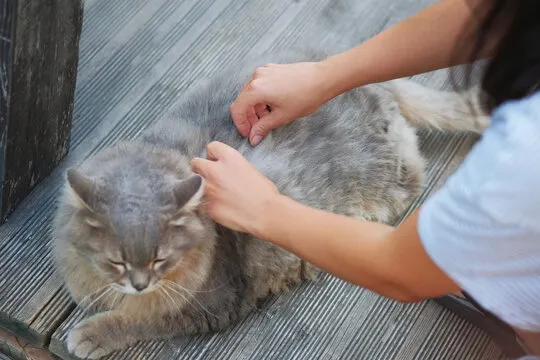
Many cat owners think fleas are just a nuisance, but the risks go beyond itching. Indoor cats can suffer from serious complications if fleas go untreated. Understanding these risks underscores why flea prevention should never be skipped.
- Flea Allergy Dermatitis (FAD): It is one of the most common skin conditions I treat. Even a single flea bite can cause a massive allergic reaction in sensitive cats, and lead to weeks of discomfort, infections, and expensive vet visits.
- Anemia in Kittens or Aged Cats: If your cat is very young, older, or underweight, fleas can cause significant blood loss. I have had cases where kittens became dangerously anemic because of an unnoticed flea infestation. Their gums turned pale, energy dropped, and they needed immediate veterinary care.
- Fleas Can Transmit Tapeworms and Diseases: When your cat swallows a flea while grooming, she can get infected with tapeworms. Fleas also carry bacteria like Bartonella (the culprit behind cat scratch disease), which can affect both your pet and you. So, you also need to know if your cat has worms to protect yourself.
Once you confirm fleas are present, or even if you just want to stay a step ahead, it is crucial to act fast and correctly. Treating your cat alone is not enough. The environment matters too. So, how to treat and prevent fleas in indoor cats? Here is how:
1. Veterinary-Approved Flea Treatments
Don’t grab just anything off the supermarket shelf.
I always advise using vet-recommended products like topical treatments (such as selamectin or fipronil), oral tablets, or flea collars with active ingredients like flumethrin and imidacloprid. Each cat’s lifestyle and health need to be considered, so consult your vet before choosing.
2. Clean and Treat the Home Environment
Even if you only see fleas on your cat, your home is likely infested.
Vacuum all carpets, furniture, and pet bedding daily for at least a week. Wash your cat’s bedding in hot water. I also recommend using flea sprays or foggers (approved for use around pets) in consultation with your vet.
3. Keep All Pets on Year-Round Prevention
If you have multiple pets, treat them all, even if only one shows signs of fleas.
Flea eggs can survive for months in the environment. That’s why I suggest year-round prevention, indoors or not. Skipping even one month can undo all your hard work.
It is completely understandable to feel frustrated or even embarrassed when your indoor cat gets fleas.
But trust me, it is more common than you think. Fleas are persistent, fast-breeding, and incredibly resourceful. The good news is, with the right tools and a bit of persistence, you can regain control quickly and keep your feline friend comfortable, safe, and flea-free.
Fleas don’t discriminate between outdoor adventurers and indoor loungers.
Even a cat who naps by the window all day can become a host for these stubborn parasites. What matters is staying vigilant, acting early, and using effective, vet-recommended treatments. As a veterinarian, I have seen how much distress fleas can cause, not just to cats but to the entire household.
If you notice even the slightest sign, don’t wait. Your cat depends on you for comfort and protection, and with the right approach, you can make your home a flea-free zone for good.
Can a fully indoor cat get fleas?
Yes, indoor cats can still get fleas. Fleas can enter your home on clothes, shoes, other pets, or even through open windows.
Why does my indoor cat suddenly have fleas?
Your cat may have picked them up from a visitor, another pet, or from flea eggs that hatched indoors after being brought in unknowingly.
Will fleas ever leave my cat?
Not on their own. You’ll need to treat your cat and your home using vet-approved flea treatments to completely eliminate them.
Can fleas live in a litter box of a cat?
Fleas prefer warm, humid areas and animal bedding, but they can survive temporarily in litter boxes if conditions are right.
How do I draw fleas off my cat?
Use a flea comb to remove fleas manually, bathe your cat with a vet-approved flea shampoo, and apply flea treatment recommended by your vet to kill remaining fleas.
