

Large breed dogs are wonderful companions, but their size comes with unique health challenges that many owners underestimate.
One of the most common problems I see in large dogs during clinical practice is joint disease. Dogs such as Labradors, German Shepherds, Golden Retrievers, and Great Danes place significant stress on their joints throughout life. Over time, this constant pressure can lead to cartilage wear, inflammation, and reduced mobility.
Along with proper weight control and regular exercise, nutritional joint supplements are often used as a supportive strategy. Let’s get into the details of the 5 best joint supplements for large dog breeds, which help maintain cartilage health, reduce inflammation, and support long term mobility.
| Products | Key Feature | Price |
Nutramax Dasuquin for Large Dogs |
Overall Best |
|
Wuffes Advanced Dog Hip and Joint Supplement |
Advanced Formula |
|
YUMA’s Glucosamine for Dogs Hip and Joint Supplement |
Highest Value |
|
Bernie’s Marvelous Mobility Joint Support for Dogs |
Editor’s Choice |
|
PetNC Hip & Joint Health Supplement for Dogs |
Budget Pick |
With so many supplements available, choosing the right one can feel overwhelming. I often remind dog owners that selecting a product should be based on scientific formulation rather than marketing claims.
- Check Important Nutrients: Glucosamine, Chondroitin sulfate, Methylsulfonylmethane, Omega-3 fatty acids, and Green lipped mussel are key nutrients that must be present in dog joint supplements.
- Consider Your Dog’s Size and Weight: Large breed dogs require appropriate dosing to achieve meaningful benefits. Supplements designed for small dogs may not provide sufficient nutrient levels for larger animals.
- Evaluate Ingredient Quality: The effectiveness of a supplement depends heavily on the quality and dosage of its ingredients. Products that contain clinically relevant amounts of glucosamine and chondroitin are generally more reliable.
- Choose the Right Form: Joint supplements are available in several forms, including chewable tablets, powders, and liquid formulations. The best option is usually the one your dog will accept consistently.
- Look for Veterinary Formulation: Veterinary formulated supplements are typically developed with safety, absorption, and clinical research in mind. These products are often more reliable than generic alternatives.
Below are five highly regarded joint supplements formulated to support the unique needs of larger dog breeds.
1. Nutramax Dasuquin for Large Dogs
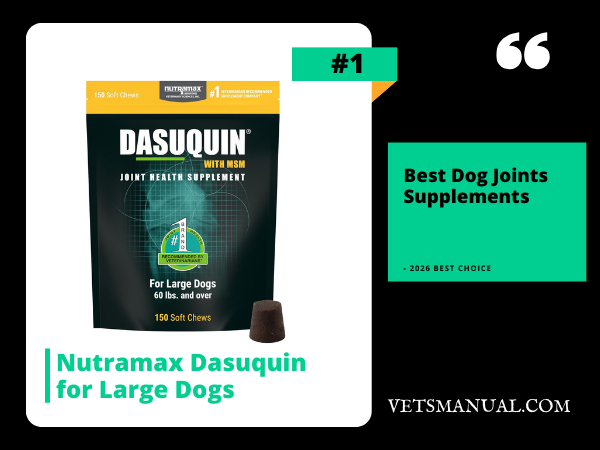
When veterinarians recommend a joint supplement, Dasuquin is often at the top of the list. Developed by Nutramax Laboratories, this formula is widely used in veterinary practice and is backed by years of research in canine joint health.
Dasuquin builds upon traditional glucosamine and chondroitin supplements by adding ASU (avocado/soybean unsaponifiables), which is a unique compound shown to support cartilage health and joint function. The formula also includes MSM, Boswellia extract, and green tea extract, which contribute antioxidant and anti-inflammatory support.
The result is a comprehensive joint health supplement designed for long-term use, particularly in large breed dogs that are predisposed to orthopedic issues.
Key Features
- One of the most veterinarian-recommended joint supplements
- Includes ASU for advanced cartilage support
- Contains multiple anti-inflammatory compounds
- High-quality ingredients with strict manufacturing standards
- Soft chews that are easy to give daily
If you are looking for a science-backed joint supplement trusted by veterinarians, Dasuquin is one of the most reputable choices available.
2. Wuffes Advanced Dog Hip and Joint Supplement

If your large dog is starting to slow down, this advanced chewable formula is designed to help them stay active and comfortable. These pork-flavored chews combine several well-known joint nutrients in a concentrated formula specifically created for large and giant breeds.
What makes this supplement stand out is its multi-ingredient approach to joint health. It includes glucosamine and chondroitin to support cartilage structure, MSM for connective tissue health, omega-3 fatty acids to help moderate inflammation, and green-lipped mussel for additional joint support.
The chews are also highly digestible, which is helpful for dogs with sensitive stomachs. Many owners appreciate that the supplement is easy to administer, and most dogs happily eat it like a treat.
Key Features
- High-potency joint formula designed specifically for large dogs
- Supports cartilage health and long-term mobility
- Helps maintain joint flexibility in aging or highly active dogs
- Tasty pork-flavored chews that dogs enjoy
- Gentle on digestion
For owners looking for a comprehensive daily joint support chew, this formula offers a well-balanced combination of proven ingredients.
3. YUMA’s Glucosamine for Dogs Hip and Joint Supplement
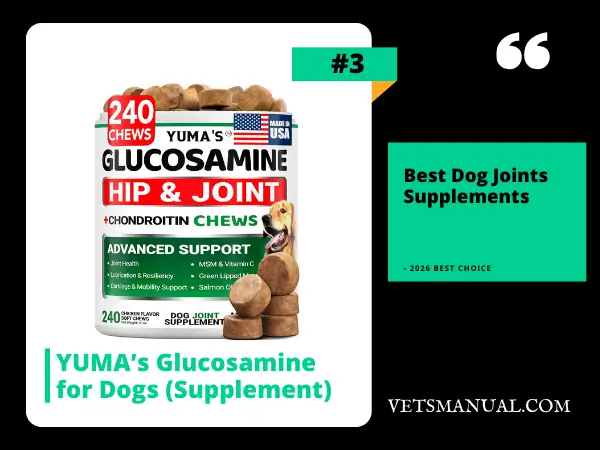
For dog owners who want a budget-friendly yet comprehensive joint supplement, YUMA’s glucosamine chews provide an impressive number of servings at a very reasonable price.
This formula focuses on the classic trio of glucosamine, chondroitin, and MSM, three ingredients commonly used to support cartilage health and joint mobility. These nutrients help maintain healthy connective tissues while promoting smoother joint movement during daily activity.
The chewable treats are suitable for dogs of all ages and sizes, making them a convenient option for households with multiple dogs. Many owners report improvements in stiffness and mobility after consistent use.
Key Features
- Supports joint flexibility and mobility
- Helps maintain cartilage health
- Suitable for puppies, adult dogs, and seniors
- Large container with 240 chewable servings
- Manufactured in the United States in a regulated facility
If you are searching for a value-packed supplement that still delivers essential joint nutrients, this one offers strong everyday support.
4. Bernie’s Marvelous Mobility Joint Support for Dogs

Bernie’s Marvelous Mobility takes a slightly different approach to joint care by focusing on whole-body support alongside joint health. Instead of relying only on traditional joint nutrients, this supplement incorporates a wider blend of antioxidants, omega-3 fatty acids, vitamins, and collagen.
The formula contains 16 active ingredients designed to support connective tissue repair, improve mobility, and maintain overall wellness. Collagen helps support joint tissue integrity, while omega-3 fatty acids contribute to inflammation management.
Another advantage is the clean ingredient profile—the chews are free from artificial colors, corn, and wheat, which can be beneficial for dogs with food sensitivities.
Key Features
- Broad formula with 16 functional ingredients
- Includes collagen and omega-3 fatty acids
- Supports overall health alongside joint function
- Made with natural ingredients and quality certifications
- Highly palatable soft chews
For dogs needing comprehensive mobility support and whole-body nutritional benefits, this supplement offers a well-rounded option.
5. PetNC Hip & Joint Health Supplement for Dogs

If you are looking for an affordable entry-level joint supplement, PetNC Hip & Joint chews provide essential nutrients that support joint function and mobility without a high price tag.
The formula includes several key joint nutrients, such as glucosamine, chondroitin, MSM, and hyaluronic acid. These compounds help maintain cartilage health, support joint lubrication, and promote smoother movement.
It also contains vitamin C and manganese, which contribute to bone health and connective tissue maintenance.
The liver-flavored chews are easy to administer, and the supplement is suitable for dogs of all breeds and life stages, making it a convenient long-term option.
Key Features
- Affordable daily joint support
- Includes hyaluronic acid for joint lubrication
- Supports cartilage, bone, and connective tissue health
- Suitable for puppies, adults, and senior dogs
- Liver-flavored chews most dogs enjoy
For owners wanting simple, reliable joint support at a low cost, this supplement provides a practical solution.
Large and giant breed dogs experience unique biomechanical and developmental challenges that make their joints more vulnerable to degeneration.
In my experience as a veterinarian, many owners assume joint problems are simply a part of aging. However, the reality is that several biological factors start affecting joint health long before dogs become seniors.
Understanding these risk factors helps explain why supportive strategies such as joint supplements are often recommended earlier for large breeds.
1. Biomechanical Load on Hips and Elbows
One of the biggest reasons large dogs develop joint disease is simple physics. The heavier the animal, the greater the mechanical stress placed on weight-bearing joints. In dogs, the hips, elbows, and stifles absorb most of the body’s load during movement.
Every time a large dog runs, jumps, or even stands up, its joints absorb substantial force. Over the years, this constant pressure can gradually damage cartilage and surrounding tissues.
When cartilage begins to thin or wear away, bones start rubbing against each other, which leads to pain, stiffness, and reduced mobility.
2. Rapid Growth During Puppyhood
Large breed puppies grow incredibly fast. Some breeds can reach close to their adult size within their first year of life. While this rapid growth may look impressive, it also places significant stress on developing joints.
Bones, cartilage, ligaments, and muscles must all develop in a coordinated way. When growth happens too quickly, the skeletal system sometimes cannot keep up with the demands placed on it.
This imbalance increases the risk of joint instability and developmental orthopedic diseases.
3. Genetic Predisposition to Hip and Elbow Dysplasia
Genetics also plays a major role in joint health. Certain large dog breeds are simply more prone to orthopedic conditions because of inherited traits. Hip dysplasia and elbow dysplasia are classic examples of conditions that are strongly influenced by genetics.
In these disorders, the joint structure does not form perfectly. The abnormal joint shape causes uneven pressure inside the joint. Over time, this leads to cartilage damage, inflammation, and eventually arthritis.
In veterinary practice, several joint disorders appear repeatedly in large breed dogs. These conditions affect mobility and quality of life, especially as dogs age. These are:
1. Hip Dysplasia
Hip dysplasia is an orthopedic disease in large dog breeds in which the hip joint does not fit together properly.
Instead of forming a tight ball-and-socket joint, the joint becomes loose and unstable. This instability causes friction within the joint. Over time, cartilage begins to deteriorate, and arthritis develops.
Dogs with hip dysplasia often show stiffness, reluctance to exercise, or difficulty rising after rest.
2. Elbow Dysplasia
Elbow dysplasia refers to a group of developmental conditions that affect the elbow joint. It is frequently seen in breeds such as Labradors, Rottweilers, and German Shepherds.
The elbow joint is complex and must distribute weight efficiently. When the joint develops abnormally, uneven pressure causes cartilage damage and inflammation. Dogs with elbow dysplasia often limp on their front legs or avoid placing full weight on the affected limb.
3. Osteoarthritis
In osteoarthritis, cartilage that normally cushions joints becomes worn or damaged. This leads to bone friction, inflammation, and pain.
Osteoarthritis is a degenerative joint disease that develops gradually over time. It is commonly seen in older dogs but may begin earlier in dogs with underlying orthopedic problems.
As the disease progresses, dogs may become less active and develop noticeable stiffness.
4. Degenerative Joint Disease
Degenerative joint disease is a broader term used to describe the progressive breakdown of joint structures.
It often develops as a consequence of chronic instability, injury, or developmental abnormalities. In many cases, degenerative joint disease represents the long-term outcome of conditions like dysplasia or arthritis.
Without proper management, mobility gradually declines as the disease progresses.
Many dog owners miss the early stages of joint disease because the signs can be subtle. Dogs naturally try to hide discomfort, which means symptoms may only become obvious once the condition has progressed.
In clinical settings, I often encourage owners to watch carefully for small changes in their dog’s movement or behavior.
- Difficulty Rising or Climbing Stairs: One of the earliest signs of joint discomfort is difficulty standing up after resting. Dogs may take longer to rise from lying positions or hesitate before climbing stairs. This hesitation often reflects stiffness in the hips or elbows.
- Reduced Exercise Tolerance: Dogs that once loved long walks or energetic play sessions may suddenly become less enthusiastic about activity. They might tire quickly, lag behind during walks, or avoid physical play altogether. This reduced stamina is often linked to joint discomfort during movement.
- Stiffness After Rest: Stiffness after periods of inactivity is a classic indicator of joint disease. Owners often notice their dog walking slowly or awkwardly after waking up or getting up from a nap. Movement may gradually improve as the joints warm up.
- Reluctance to Jump or Run: Dogs experiencing joint pain often avoid actions that place high stress on their joints. Jumping into cars, climbing onto furniture, or running after toys may suddenly become less appealing.
Joint supplements work by maintaining cartilage structure, regulating inflammatory responses, and supporting the lubrication system that allows joints to move smoothly.
When these biological processes are supported, the overall environment inside the joint becomes healthier and more stable. Dog joint supplements are widely used in veterinary medicine as supportive nutritional tools for maintaining joint health.
While they are not medications that cure orthopedic diseases, they can provide important nutrients that support the structure and function of joints.
In large breed dogs that are predisposed to conditions such as arthritis or hip dysplasia, these supplements are often used to help maintain mobility and slow the progression of joint degeneration.
1. Cartilage Support and Repair
Joint supplements support cartilage health by providing nutrients that help maintain the structural components of cartilage.
These nutrients support the natural metabolism of cartilage cells and help maintain the resilience and elasticity of joint tissues. Although supplements cannot completely rebuild severely damaged cartilage, they may help support the body’s natural repair processes and slow further deterioration.
2. Reduction of Joint Inflammation
Joint supplements often include nutrients that help regulate inflammatory responses within the body.
These nutrients may help reduce swelling and discomfort inside the joint by supporting a healthier inflammatory balance. This reduction in inflammation can contribute to improved mobility and greater comfort for affected dogs.
3. Lubrication and Synovial Fluid Support
Healthy joints rely on a specialized fluid called synovial fluid, which fills the joint capsule and acts as a natural lubricant. This fluid allows the surfaces of the joint to glide smoothly during movement and helps reduce friction between bones.
Synovial fluid also plays an important role in nourishing cartilage cells. Because cartilage does not have its own blood supply, it depends on nutrients delivered through synovial fluid to maintain its health.
In joints affected by inflammation or degeneration, the quality and viscosity of synovial fluid may decline. This can reduce lubrication within the joint and increase friction during movement.
Some joint supplement ingredients help support the production and quality of synovial fluid. As they help maintain adequate lubrication within the joint capsule, these nutrients contribute to smoother movement and better joint flexibility.
Joint health depends on several biological processes, including cartilage maintenance, inflammation control, and proper joint lubrication. The most effective joint supplements usually contain ingredients that support one or more of these functions.
Not all joint supplements provide the same benefits. Many products on the market contain a wide range of ingredients, but only a few have strong scientific support for maintaining joint health.
When I discuss joint supplements with dog owners, I always emphasize the importance of learning what each ingredient actually does inside the body.
Understanding these key nutrients can help dog owners choose supplements that truly support mobility and long-term joint health rather than relying on marketing claims alone.
1. Glucosamine
Glucosamine is one of the most widely used ingredients in joint supplements for dogs and is considered a foundational nutrient for joint health.
This compound plays an important role in the formation and maintenance of cartilage, which is the smooth connective tissue that cushions the ends of bones inside joints. Cartilage allows bones to glide smoothly against each other during movement and acts as a shock absorber during physical activity.
Glucosamine supports the production of important structural molecules within cartilage, including glycosaminoglycans and proteoglycans. These molecules help maintain the strength, flexibility, and resilience of joint tissues.
By supporting cartilage metabolism, glucosamine helps maintain joint structure and may slow the progression of cartilage deterioration. While it cannot completely rebuild severely damaged cartilage, it can support the body’s natural repair mechanisms and help maintain joint function over time.
2. Chondroitin Sulfate
Chondroitin sulfate is another important ingredient that works closely with glucosamine to support cartilage health.
This compound is naturally found in cartilage and plays a key role in maintaining the structure and elasticity of joint tissues. In joint supplements, chondroitin sulfate is commonly combined with glucosamine because the two nutrients complement each other in supporting cartilage maintenance.
One of the most important functions of chondroitin sulfate is its ability to help inhibit enzymes that break down cartilage tissue. These enzymes are often more active in dogs with osteoarthritis or degenerative joint disease, which can accelerate cartilage damage.
Chondroitin also helps cartilage retain water. Well-hydrated cartilage is better able to absorb shock and distribute pressure during movement. This hydration helps maintain the cushioning effect that protects joints from mechanical stress.
3. Methylsulfonylmethane or MSM
Methylsulfonylmethane, commonly known as MSM, is a naturally occurring sulfur-containing compound that is often included in joint support supplements.
Sulfur is an essential element in many structural molecules found in connective tissues, including collagen and other proteins that contribute to the strength and stability of joints. Because connective tissues rely on sulfur for proper structure, MSM can play a supportive role in maintaining joint integrity.
Another reason MSM is included in joint supplements is its potential anti-inflammatory properties. Chronic joint disease often involves ongoing inflammation within the joint capsule, which contributes to stiffness and discomfort.
MSM may help support the body’s natural anti-inflammatory processes, which can contribute to improved joint comfort and mobility. When combined with other joint-supporting nutrients, MSM may help enhance overall joint support.
4. Omega-3 Fatty Acids
Omega 3 fatty acids are widely recognized for their strong anti-inflammatory properties and are frequently included in joint support supplements for dogs.
Inflammation plays a central role in many joint diseases, including osteoarthritis. When joints become inflamed, inflammatory chemicals can damage cartilage and contribute to pain and stiffness.
Omega-3 fatty acids help regulate inflammatory pathways within the body. By reducing the production of certain pro-inflammatory compounds, these fatty acids may help decrease joint inflammation.
Reducing inflammation can lead to improved joint comfort and greater mobility in affected dogs. For this reason, omega-3 fatty acids are often recommended as part of a comprehensive joint health strategy.
5. Green Lipped Mussel
Green lipped mussel is a natural marine ingredient that has become increasingly popular in veterinary joint supplements.
This ingredient is derived from a species of mussel found in New Zealand and contains a unique combination of nutrients that support joint health. Unlike single compound supplements, green lipped mussel provides multiple beneficial components in one natural source.
It naturally contains glucosamine, glycosaminoglycans, and omega-3 fatty acids, all of which contribute to joint structure and function. These nutrients help support cartilage maintenance and joint lubrication.
In addition, green lipped mussel contains several bioactive compounds that may help regulate inflammatory responses within the joints. This ingredient may help support joint comfort and long-term mobility by combining structural nutrients with anti-inflammatory properties.
Joint supplements work best when combined with proper lifestyle management. In veterinary practice, I always emphasize that nutrition alone cannot maintain joint health without supportive care.
- Maintain a Healthy Body Weight: Excess body weight significantly increases stress on joints. Even a small amount of extra weight can accelerate cartilage wear and worsen joint disease.
- Provide Controlled Exercise: Regular moderate exercise helps maintain muscle strength and joint flexibility. Activities such as walking and swimming are particularly beneficial.
- Start Supplements Early: Preventive support often produces better outcomes than waiting until severe disease develops. Large breed dogs may benefit from joint support earlier in life.
- Combine Nutrition With Veterinary Care: In many cases, joint supplements are used alongside other management strategies such as physical therapy, medications, or specialized diets.
Joint health is one of the most important long term concerns for large breed dogs. Because of their size, genetics, and growth patterns, these dogs face a higher risk of orthopedic problems throughout life.
I often remind owners that joint disease rarely appears suddenly. It develops gradually through years of mechanical stress and cartilage wear. So, understanding early warning signs, supporting joint nutrition, and managing weight and exercise carefully is essential.
With this approach, you can help protect your dog’s mobility. Joint supplements are not miracle cures, but when used correctly, they can support cartilage health, reduce inflammation, and contribute to better comfort and quality of life.
