
When I visit farms, the first thing I always remind farmers is that diseases rarely appear suddenly, even though they often seem that way. Early signs usually start quietly, sometimes so subtly that they are easy to miss during a busy day.
By the time obvious symptoms show up, the disease has already progressed inside the animal and may have spread throughout the herd. Early diagnosis gives us the chance to intervene at the right moment before the damage becomes irreversible.
It saves animals, protects productivity, reduces expenses, and keeps farms running smoothly. That early window is more valuable than most people realize.
Diseases follow very predictable patterns when it comes to spreading on a farm. They begin silently inside one or two animals before anyone realizes something is wrong. During this early stage, infected animals shed pathogens through saliva, manure, urine, nasal secretions, and even the air in some cases. Also, flies can carry the disease causing agents from one animal to another.
It is the point where we have the greatest opportunity to break the cycle. If the diagnosis happens early, we can isolate affected animals, treat them quickly, and stop the disease from jumping into the rest of the herd, most effectively by practicing strategies to control flies on the farms. Once several animals start showing signs, control becomes much more difficult and stressful.
Why Subclinical Disease Is Often the Hidden Enemy?
Subclinical disease refers to an illness that is present in the body but not yet showing visible symptoms. I see this frequently in dairy cows with mastitis, sheep with internal parasites, or poultry with respiratory infections.
These animals look normal, eat normally, and interact normally, yet they lose productivity every single day. Early diagnosis helps us detect subclinical disease before it turns into something severe.
It is one of the biggest reasons early testing, monitoring, and routine veterinary evaluation are so important. Detecting problems before symptoms appear can save hundreds or even thousands of dollars on a busy farm.
Every disease has a financial cost, even when it looks mild. I often explain to farmers that the real expense comes from reduced growth rates, lower milk yield, poor fertility, increased feed wastage, and higher treatment needs later on.
When the disease is caught early, treatment is usually simpler, cheaper, and more effective. But when the diagnosis is delayed, animals may require more intensive care and sometimes even hospitalization.
Worse, the disease may spread across the herd, turning a single animal problem into a farm wide crisis. Early diagnosis is therefore not only a medical measure but a strong financial strategy.
The following points can most effectively describe the importance of early disease detection in farm animals.
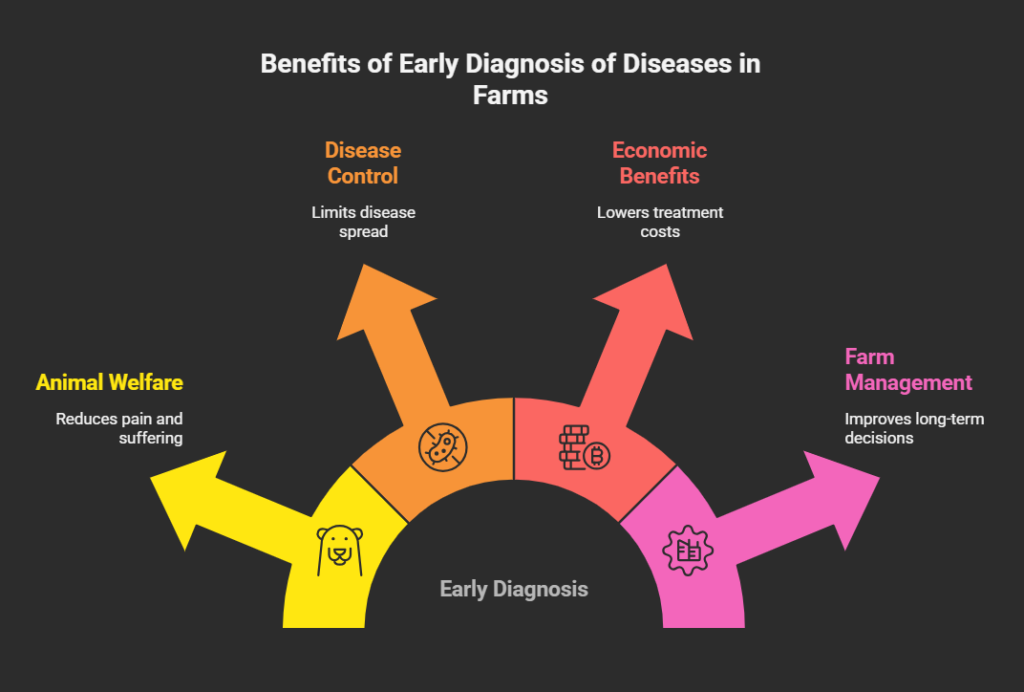
1. Early Disease Detection Protects Animal Welfare
Early diagnosis is one of the most compassionate things we can do for farm animals. It prevents suffering, shortens illness duration, and offers animals the best possible chance to recover fully.
When farmers understand the welfare benefits, they begin to see disease detection not as a chore but as a responsibility that directly improves the lives of their animals.
a) Reducing Pain and Discomfort for Sick Animals
When you diagnose a disease early, you can start appropriate treatment before the animal reaches a painful stage. Conditions like lameness, mastitis, pneumonia, and digestive disorders become far more painful as they progress.
Early detection means you can control inflammation, prevent secondary infections, and keep animals comfortable. I often tell farmers that comfort and productivity go hand in hand because any animal in pain will eat less, move less, and perform poorly.
Early diagnosis benefits both the animal and the farmer because it ensures that treatment is kinder, faster, and ultimately more successful.
b) Improved Recovery Rates and Long Term Health
A major advantage of early diagnosis is that it dramatically increases recovery chances. Animals treated at the first signs of disease respond quickly because their immune systems are still strong.
Once the disease has advanced, the body becomes overburdened, and treatment takes longer. Sometimes the animal recovers but remains weak or prone to future illness. Early diagnosis prevents these long term complications.
I often see cattle with early respiratory infections recover completely within a few days, while those diagnosed late may suffer chronic lung damage. You can imagine how much difference timing makes for an animal’s future performance.
c) Reduce Mortality and Protect Vulnerable Animals
Young animals, pregnant females, and seniors are always more vulnerable to disease. When diagnosis is delayed, these groups are the first to suffer severe outcomes. I have seen entire groups of young calves or lambs collapse due to late identification of respiratory or digestive infections.
Early diagnosis prevents these tragedies by giving us the chance to act before the disease overwhelms the animal’s immune system. This protective effect is one of the most important welfare benefits on any farm.
Animals stay healthier, stronger, and more resilient when disease is caught early.
2. Early Diagnosis Reduces Farm Level Disease Spread
Disease control on a farm involves more than treating individual animals. It requires managing the entire herd as a single living system. No matter how well a farm is managed, diseases will appear from time to time. What matters is how quickly we identify them.
Early diagnosis turns a potential outbreak into a manageable event rather than a full blown crisis. Here is how it can help:
a) Breaks the Chain of Transmission Before It Expands
Most farm diseases spread quietly before you ever notice clear symptoms. Animals shedding pathogens during this silent period can unknowingly infect dozens of others. When the diagnosis is early, you can immediately isolate the affected animal, apply biosecurity measures, and conduct screening tests on nearby animals.
It breaks the transmission chain quickly. I have seen farms where early detection limited a respiratory outbreak to just one or two animals. In contrast, late diagnosis resulted in dozens falling sick. The difference between those two outcomes was simply timing.
b) Protects High Value Animals and Genetic Stock
Every farm has animals that are particularly valuable, such as elite breeders, high yielding dairy cows, or genetically superior rams and bucks. These animals can suffer massive losses if disease spreads unchecked. Early diagnosis helps protect these valuable animals by identifying disease carriers early and preventing exposure.
I frequently use targeted screening and rapid diagnostics on farms where valuable breeding stock is present because even a single outbreak can compromise years of genetic progress. Quick identification ensures that the most important animals remain healthy and productive.
c) Reduces Environmental Contamination on the Farm
Many diseases not only affect animals but also contaminate the farm environment. Manure buildup, bedding, soil, and shared equipment can become reservoirs of infection. Early diagnosis prevents heavy shedding of pathogens into the environment, which makes cleaning, disinfection, and future disease control much easier.
Once the environment becomes contaminated, it takes a huge amount of time, labour, and money to fix the situation. Quick detection keeps contamination low and supports long term farm hygiene.
This is something I always stress during farm visits because prevention is far easier than environmental cleanup.
3. Economic Benefits of Early Disease Diagnosis in Livestock Farming
Disease is one of the biggest hidden costs in livestock production. Farmers often notice major expenses like feed or equipment, but they underestimate the silent economic drain caused by undiagnosed or late diagnosed disease.
Early diagnosis reduces this drain and helps ensure the farm remains profitable in the long run.
a) Lower Treatment Costs and Shorter Recovery Time
Treating a disease early usually means fewer medications, fewer veterinary visits, and less intensive care. When an animal is diagnosed late, treatment becomes more complicated because secondary infections, organ stress, and severe inflammation may already be present.
Early diagnosis, therefore, reduces medicine use, labour costs, and downtime. Animals also return to normal production faster. I often see farmers amazed at how quickly a cow recovers when treatment begins at the very first sign of mastitis or pneumonia.
These small early interventions save hundreds of dollars over time.
b) Minimized Production Losses in Dairy, Meat, and Egg Farms
One of the biggest economic benefits of early diagnosis is the prevention of reduced productivity. Sick animals produce less milk, grow more slowly, and lay fewer eggs. These losses often begin long before noticeable symptoms appear.
- A cow with early mastitis may already be losing several litres of milk daily, even though her udder looks normal.
- A broiler chicken with subclinical respiratory disease may eat more feed but gain less weight.
Early diagnosis helps prevent these silent losses by allowing immediate intervention. It keeps animals performing at their highest potential and maintains a steady farm income.
c) Prevents Costly Farm Level Outbreaks
Outbreaks are financially devastating. They lead to massive treatment costs, labour shortages, reduced production, potential mortality, and sometimes even trade restrictions.
- When the first case is diagnosed early, the outbreak can often be contained quickly.
- When diagnosis is delayed, the disease may spread through multiple pens or herds, creating a crisis.
I always tell farmers that early diagnosis is like a fire alarm. It alerts us before the flames become uncontrollable. The sooner we know, the easier it is to protect the rest of the farm.
4. Improved Long Term Farm Management Through Early Diagnosis
Early diagnosis is not only about treating illness. It also shapes long term management decisions. It helps farmers understand disease patterns, identify weak areas in management, and make better choices regarding breeding, nutrition, and housing.
a) Creates a More Accurate Disease History for the Farm
Every farm has its own disease profile based on climate, feed sources, animal genetics, and management style. Early diagnosis helps you build an accurate record of which diseases appear frequently and when they tend to flare up.
It also allows you to plan preventive measures ahead of time. For example, if you consistently diagnose early coccidiosis in young goats during the rainy season, you can contact a veterinarian for treatment and hygiene strategies in advance.
These insights become extremely valuable over the years.
b) Supports Better Breeding Decisions
Some animals are more resistant to disease than others. Early diagnosis helps farmers identify which animals repeatedly fall sick and which ones remain healthy. This information guides breeding programs to promote strong immunity and reduce susceptibility in future generations.
When disease is diagnosed early, you can also prevent sick animals from being bred at the wrong time, which protects both the mother and the offspring. Over time, farms become genetically stronger and much more resilient.
c) Helps Farmers Fine Tune Their Management Practices
When a disease is caught early, it becomes easier to analyze what caused it. Maybe the bedding is too wet, the ventilation is poor, the feed quality dropped, or animals are overcrowded. Early diagnosis gives us a chance to identify these problems before they become serious.
Once the root cause is found, management adjustments can be made immediately. These adjustments reduce the risk of recurrence and create a healthier environment for the entire herd.
Modern farming has advanced significantly. Today, we have access to powerful diagnostic tools that make early detection easier and more accurate than ever. Let’s get into how technology supports early diagnosis and why investing in modern tools can greatly improve farm health outcomes.
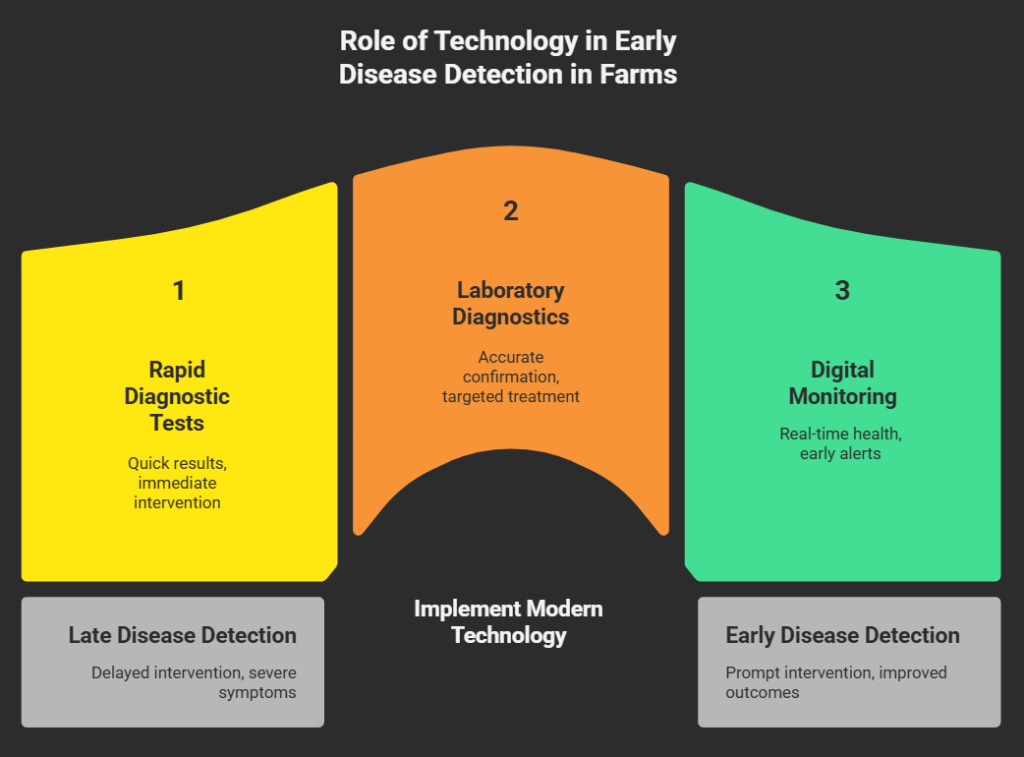
1. Rapid Diagnostic Tests and Point of Care Tools
I frequently use rapid testing kits on farms because they provide results within minutes. These kits help detect diseases like mastitis, respiratory infections, parasitic loads, and certain viral illnesses.
The quicker I know what I am dealing with, the faster I can intervene. These portable tools are especially useful in remote areas where laboratory access may be limited. They reduce waiting time and eliminate guesswork.
2. Laboratory Diagnostics and Advanced Screening
For more complex diseases, laboratory testing is essential. Early sampling allows us to identify bacteria, viruses, parasites, and metabolic imbalances before symptoms become severe.
Blood tests, fecal tests, culture sensitivity testing, and PCR diagnostics all play a major role. These tools help confirm the diagnosis and guide targeted treatment. When samples are taken early, the accuracy of these tests is much higher.
3. Digital Monitoring and Precision Livestock Technology
Many modern farms are now using wearable sensors, monitoring cameras, and smart software to detect early changes in animal behaviour. These systems pick up small signs such as reduced movement, changes in eating patterns, mild fever, or altered rumination.
When you receive early alerts, you can investigate before the disease becomes severe. This technology is transforming livestock farming by providing real time health monitoring that was once impossible.
Farmers play the most important role in early disease detection. As a veterinarian, I may visit regularly, but you see your animals every day. To help you improve your early diagnosis skills, I am providing insights on how to become more skilled at spotting early signs and what steps to take when something feels wrong.
1. Develop a Daily Observation Habit
The best farmers I know practice daily observation. They do not just glance at animals; they watch how they move, eat, drink, and interact. They pay attention to manure, breathing, posture, and overall demeanour.
These small habits help catch disease at an extremely early stage. I always encourage farmers to trust their instincts because subtle changes often mean something is starting to develop.
2. Keep Records and Track Patterns
Written or digital records are one of the most powerful tools in early diagnosis. Tracking weight, milk yield, feed consumption, reproductive cycles, and behaviour patterns helps identify abnormalities quickly.
When you review these records, you can spot trends that are invisible during a quick physical exam. Consistent record keeping turns farmers into highly effective disease detectives.
3. Work Closely With a Veterinarian
Early diagnosis works best when farmers and veterinarians function as a team. Regular farm visits, routine screenings, and open communication make it easier to catch diseases before they spread.
I always appreciate it when farmers call at the first sign of trouble rather than waiting until the situation worsens. Those early conversations often save the farm time, money, and stress. I also recommend routine wellness exams as part of the farm schedule.
Early diagnosis is one of the most powerful tools we have in livestock farming. It protects animals by reducing suffering, speeding up recovery, and preventing mortality in vulnerable groups. It also safeguards the farm by lowering treatment costs, preventing outbreaks, and maintaining consistent productivity.
When farmers observe their animals closely and act quickly, they create a healthier environment that benefits every aspect of farm management. With modern diagnostics and strong farmer veterinarian collaboration, early detection becomes easier than ever.
When you embrace early diagnosis as a routine habit, you invest in both your animals and the long term success of your farm.
