
I have been working with livestock farms of all sizes, and one challenge I see farmers struggle with every summer is the overwhelming rise in fly populations. Flies may look small, yet their impact grows quickly and affects animal comfort, feed efficiency, weight gain, and disease transmission.
Every farmer I meet wants natural solutions that truly work without harming animals or the environment. So, we will discuss here the same natural fly control strategies I teach my clients. These methods protect animal health, improve farm hygiene, and help you maintain a more productive and stress free farm.
Flies flourish on livestock farms in the first place, as a farm creates perfect conditions for rapid fly breeding, because moisture, organic waste, and warmth all exist in one place.
Many farmers focus only on killing adult flies, yet the real solution lies in breaking the reproductive cycle at multiple points. When we approach fly control with this deeper understanding, every method becomes more effective and long lasting.
Whenever I visit a farm, I explain that natural fly management starts with understanding how quickly flies reproduce. Adult flies lay eggs in warm, moist areas that contain organic matter such as manure, bedding, spilt feed, and decaying plant material.
Within a short period, eggs become larvae, and larvae then develop into pupae. A single fly generation can complete its development in a very short span of time if the environmental conditions are ideal.
Once you understand this cycle, you automatically see why cleaning routines must be frequent and consistent.
Environmental Conditions That Encourage Fly Breeding
Flies thrive when moisture combines with warmth. Manure piles that remain undisturbed, wet straw, leaking waterers, and humid corners of barns give flies the perfect place to multiply. Even small areas such as gaps behind feed troughs can support large numbers of larvae.
If these areas sit untouched for several days, the entire farm becomes an attractive breeding ground. When I walk through barns, I help farmers identify hidden moisture pockets that they often overlook because they feel small or insignificant.
These small spots usually turn out to be extremely productive larval sites.
Species Commonly Found in Livestock Farms
On most farms, I see house flies, stable flies, horn flies, and face flies. Each species behaves differently, which affects how we control them.
- House flies feed on organic waste and are strong fliers that spread bacteria.
- Stable flies bite animals and reduce milk yield as well as weight gain.
- Horn flies remain on cattle and feed frequently, which stresses the animals continuously.
- Face flies focus on secretions around the eyes and can spread eye infections.
Knowing the species present helps you choose which natural strategies will be most effective for your situation.
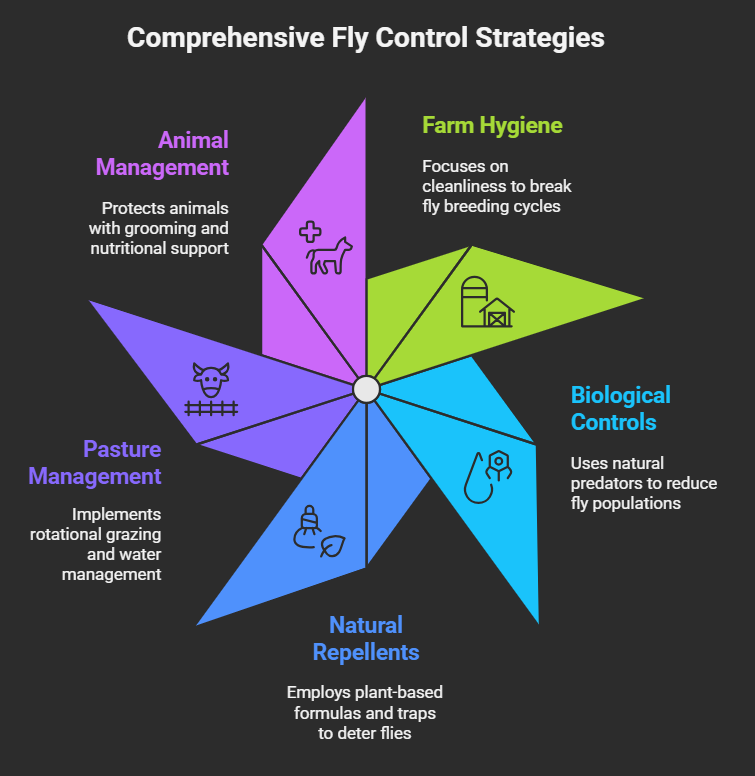
Flies thrive in farm environments because of abundant food, moisture, and warmth. To effectively control them, a comprehensive approach is essential. Focusing on sanitation, biological methods, natural repellents, pasture management, and animal protection allows you to break their life cycle while promoting a healthier farm environment.
Here, I will outline all major strategies I recommend to farmers, explaining how each works and why it is important. Implementing multiple methods together ensures lasting control and healthier, more comfortable livestock.
1. Improve Farm Hygiene to Break the Fly Cycle
Farm hygiene is the foundation of natural fly control. No matter which natural products you use, they will always work better when the environment itself is less inviting to flies. Good hygiene not only breaks breeding cycles but also improves overall animal health by reducing exposure to pathogens.
You have to refine your daily habits so your entire farm becomes less fly friendly. Once the hygienic baseline is achieved, every other natural method multiplies in effectiveness. Here is how you can do this.
a) Manure Management Practices That Reduce Fly Breeding
Manure is the single most attractive material for fly reproduction. When manure accumulates for even a short time, it becomes a warm and moist nutrient source for fly larvae. Removing manure frequently is the simplest and most impactful hygienic measure.
I advise farmers to clean barns more often during peak fly season and to pay attention to corners where manure can quietly build up. If manure must be stored, it should be composted properly so internal temperatures rise to levels that prevent larvae survival.
b) Clean Bedding and Proper Drainage
Wet bedding is another area where flies flourish. Bedding should be replaced often enough to stay dry, and the ground underneath should have proper drainage so water does not collect. Many farmers underestimate the effect of small puddles that form under waterers.
Eliminating these wet areas reduces the number of larvae dramatically. I also recommend lifting mats or boards occasionally to check for moisture accumulation underneath, because flies will use those areas as hidden breeding sites if left unattended.
c) Feed Spillage Control and Waste Handling
Feed that falls onto the ground mixes with saliva, moisture, and manure. It creates a nutrient rich material that flies immediately to locate. I always encourage farmers to maintain clean feed troughs and remove spilled feed promptly.
When feed rooms are kept neat, and bins are sealed correctly, flies lose another essential breeding site. Waste from feed preparation should be placed in designated bins that are emptied before they begin to smell or ferment.
2. Use Natural Biological Controls for Sustainable Fly Management
Biological control is one of my favourite natural strategies because it uses living organisms to reduce fly populations. These methods work quietly in the background and steadily lower the number of flies without chemicals.
Many farms I work with develop long term success by combining biological controls with good hygiene. The most reliable biological tools and how you can use them correctly for long term impact are:
a) Parasitoid Wasps Reduce Fly Populations Naturally
Parasitoid wasps are tiny insects that do not harm animals or humans. Their entire life purpose is to locate fly pupae and lay their eggs inside them. When the wasp larvae grow, they destroy the developing fly. This interrupts the life cycle effectively.
Farmers who apply parasitoid wasps every few weeks notice a gradual reduction in adult fly numbers. These wasps work best when the farm already has regular cleaning routines because they target pupae rather than eggs or larvae in wet manure.
b) Beneficial Predatory Beetles and Their Role on Farms
Some beetles feed on fly eggs and larvae. They thrive in manure that is composted correctly or kept in controlled piles. When these beetles are present, fly larvae rarely survive long enough to reach adulthood.
I often suggest farmers create stable manure composting zones that favour beetle activity. Once established, beetle populations maintain themselves and require little extra work from the farmer.
However, their effectiveness depends on avoiding broad spectrum chemical insecticides.
c) Encourage Birds and Bats in the Farm Environment
Natural predators such as swallows, starlings, and certain bat species consume large numbers of adult flies. Encouraging their presence can significantly reduce flying insects. When farmers install simple roosting boxes or nesting ledges near barns, insect feeding birds become regular visitors.
These birds and bats do not eliminate flies entirely, but they help decrease adult populations in the air. It makes other fly control methods more efficient because fewer flies survive long enough to reproduce.
3. Natural Repellents and Eco Friendly Fly Deterrents
Natural repellents complement hygiene and biological control by reducing the number of flies that land on animals or remain inside barns. These repellents rely on scents, plant extracts, airflow manipulation, or physical barriers.
I teach farmers that repellents do not replace sanitation, yet they enhance animal comfort and reduce stress. So now, we should look into practical repellent methods that are safe for long term use and gentle on livestock and the environment.
a) Herbal Sprays and Plant Based Formulas
Herbal sprays made with essential oils such as citronella, lemongrass, eucalyptus, and neem can repel flies effectively when applied routinely. These sprays create a scent barrier around the animal that discourages flies from landing.
Most natural sprays need regular application because they evaporate or lose potency over time. When farmers apply them consistently, particularly during peak fly hours, animals show fewer signs of irritation.
I often recommend rotating formulas, so flies do not adapt to one particular scent.
b) Fly Traps That Work Without Chemicals
Many natural traps rely on light, scent, or sticky surfaces. When placed in the right locations, these traps attract flies away from animals and into controlled capture zones. Sticky panels work well near windows, while bait traps are useful around manure storage or feed waste areas.
The success of traps lies in strategic placement. When farmers move traps every few weeks or replace lures regularly, the capture rate increases. Although traps do not control larvae, they help reduce adult populations significantly.
c) Fans, Air Movement, and Light Adjustments
Flies prefer stagnant air and low airflow. Installing fans inside barns not only improves ventilation but also discourages flies from lingering. Proper airflow keeps animals cooler and reduces humidity, which is another benefit for overall hygiene.
Adjusting light intensity or installing reflective materials near entry points also confuses flying insects. When airflow and lighting are managed well, animals remain more comfortable, and the barn environment becomes less appealing to flies.
4. Pasture Management Techniques for Natural Fly Reduction
Pastures often host large numbers of flies, especially species such as horn flies and face flies that remain close to grazing animals. Effective pasture management reduces contact between animals and fly breeding sites.
Many farmers overlook how much pasture hygiene affects fly populations, so below are the practical steps that protect grazing livestock naturally.
a) Rotational Grazing to Limit Fly Pressure
Rotational grazing prevents animals from spending too much time in one spot. When cattle remain in the same pasture for long periods, manure accumulates and flies multiply rapidly. You can break fly cycles and give the land time to dry by moving animals regularly.
Dry pastures offer fewer breeding opportunities. I have seen dramatic reductions in horn fly numbers when farmers follow structured rotational grazing schedules.
b) Manage Water Points and Wet Areas
Natural water bodies, troughs, and shady moist spots attract flies. Many larvae thrive in wet soil or organic debris near water points. Regular cleaning, drainage improvements, and vegetation trimming help keep these areas dry.
I advise farmers to walk around their pastures weekly and identify spots where moisture persists. A simple adjustment, such as redirecting water flow or removing old organic matter, can eliminate an entire breeding site.
c) Use Natural Fly Predators in Pasture Ecosystems
Spiders, beetles, dragonflies, and predatory insects play essential roles in outdoor fly control. Diverse pasture vegetation tends to support more predators. When pastures contain a mix of grasses and flowering plants, the ecosystem becomes stronger and more balanced.
Encouraging biodiversity helps control flies without any additional input from the farmer. This approach works best when combined with rotational grazing and thoughtful water management.
5. Animal Based Management for Reducing Fly Stress
A key part of fly control is protecting the animals directly. Even if the environment is managed well, flies may still attempt to land and irritate livestock. These measures focus on improving animal resilience and reducing the impact of flies on comfort and productivity.
When animals remain calm and comfortable, their feed conversion improves and disease transmission decreases.
a) Regular Grooming and Coat Care
Animals with clean coats attract fewer flies. Grooming removes sweat, dirt, and loose hair that may attract insects. I advise farmers to brush their animals regularly during fly season. Grooming also allows you to check for wounds or infections that could attract flies.
A well maintained coat allows natural repellent sprays to work more effectively when applied.
b) Use Fly Tags, Masks, and Physical Barriers
Fly masks protect the eyes and face of cattle, horses, and other livestock. These masks prevent the irritation caused by face flies. Fly tags infused with natural oils can also be useful when chemical free management is required.
Some farmers use lightweight blankets or sheets for horses that graze outdoors. Physical barriers are especially helpful for young animals that cannot defend themselves well.
c) Nutritional Support for Better Resilience
Healthy animals cope better with environmental stress. When diets contain adequate vitamins and minerals, particularly zinc, copper, and vitamin E, the skin barrier improves. It makes animals less appealing to biting flies.
Good nutrition also strengthens immunity, which helps protect against infections spread by flies. A balanced diet works quietly in the background yet contributes significantly to overall fly resistance.
Natural fly control works best when multiple methods are combined. I always teach farmers to treat their farm as an interconnected system. When hygiene improves, predators thrive. When repellents are used correctly, animals experience less stress.
When pastures are managed thoughtfully, fly numbers decrease across the entire property. This integrated approach transforms fly control from a constant battle into a manageable routine.
Every farm is unique, so your plan may differ slightly depending on climate, livestock type, and housing style. However, the principles remain the same.
- Address the environment
- Support natural predators
- Repel adult flies
- Protect your animals directly.
With consistency, these steps create lasting results that reduce the need for chemicals and improve animal welfare.
Natural fly control on livestock farms is not only possible but also highly effective when approached with a structured plan. When you start improving hygiene, supporting natural predators, managing pastures carefully, and focusing on the comfort of your animals, you can dramatically reduce fly populations without relying on chemicals.
The key is consistency. When each small step is followed regularly, the overall impact becomes powerful. I have seen many farms transform their fly challenges using these simple methods. With patience and routine care, your animals will enjoy a calmer, healthier, and more productive environment throughout the fly season.
