
Key Takeaways: Is Bacon Safe for Dogs?
- • The Verdict: No. While not strictly toxic in a single tiny bite, bacon is unsafe due to extreme levels of salt, saturated fats, and preservatives.
- • Primary Health Risks: Feeding bacon can lead to pancreatitis (life-threatening inflammation), kidney strain from sodium, and obesity.
- • Immediate Warning Signs: Contact a vet if your dog shows abdominal pain, a hunched back, repeated vomiting, or lethargy.
- • Senior & Puppy Alert: Older dogs and puppies have higher risks of organ stress and must avoid processed meats entirely.
- • Healthy Alternatives: Opt for safer proteins like plain boiled chicken, dehydrated turkey jerky, or crunchy carrots.
Bacon is one of those foods that grabs your attention the moment it starts sizzling in the pan. I know how tempting it is to share a crispy slice with your dog when you see those puppy eyes staring at you with complete faith and excitement.
I often get asked if dogs can safely eat bacon. The honest answer is more complicated than a simple yes or no. So, I will describe everything you need to know about giving bacon to dogs, including the risks, how much is considered unsafe, and healthier protein options.
Bacon refers to thin slices of meat that come from the belly or back of a pig.
It is cured using salt and sometimes sugar, spices, or preservatives. After curing, bacon may be smoked to give it a stronger aroma and flavor. People usually cook bacon by frying or baking it until it becomes crisp.
Bacon is known for its rich taste, high fat content, and strong scent. Although it is popular in many dishes and breakfasts around the world, it is not considered a healthy food because it contains a large amount of saturated fat, salt, and chemical preservatives.
No. Dogs can’t have bacon because it contains a high amount of salt, saturated fat, and chemical preservatives that place unnecessary strain on a dog’s digestive system and organs.
Many dog owners believe that a small piece of bacon will not cause harm. The reality is that bacon can lead to gastric issues and even pancreatitis. When I guide pet parents about nutrition, my goal is not to make food feel restricted, but rather to help them understand the reasons behind avoiding certain human foods.
Bacon falls into the category of foods dogs technically can eat in tiny amounts on rare occasions, yet there is no real benefit, and many possible consequences.
I am not saying this generally that bacon is not safe for dogs. There is a proper biological reason behind which is important for you to understand to determine the core issue with feeding bacon.
Dogs are biologically different from humans. Their bodies are not built to process large quantities of salt and saturated fats. When a dog eats bacon regularly or in large amounts, the digestive system becomes stressed because the liver and pancreas must work harder than usual.
With time, it can lead to inflammatory diseases and serious organ damage.
Fun Fact
Bacon is a processed food, which means it goes through curing, salting, and chemical treatment. During this process, harmful compounds build up that are not healthy for dogs. Even though a dog may seem perfectly fine after one bite, damage accumulates slowly.
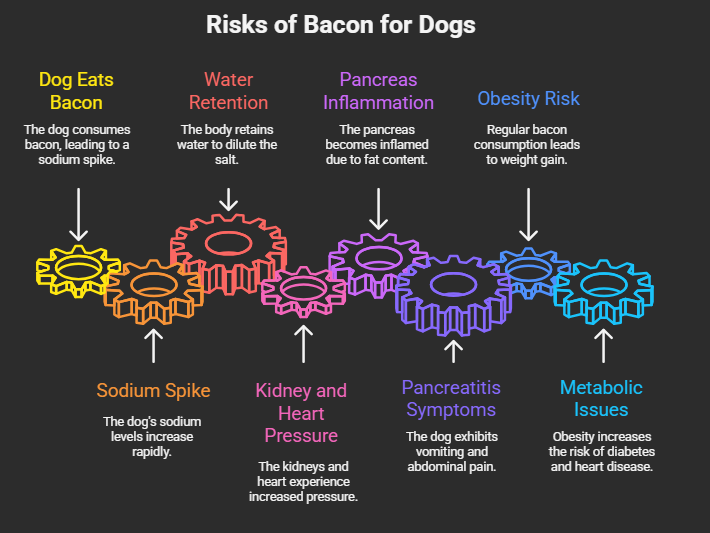
Whenever a dog eats bacon, there is a sudden spike in sodium levels. The body then retains water to dilute the salt, which puts pressure on the kidneys and heart. The saturated fat content can trigger inflammation of the pancreas.
This inflammation is extremely painful and can be life threatening. Many dog owners bring their dogs to clinics with vomiting and abdominal pain, not realizing that the cause was the bacon they shared the day before.
It is never worth risking a dog’s long term health for a moment of happiness over a food item that does not benefit them nutritionally. Here are the risks of Bacon for dogs.
1. High Salt Content and Its Effect on Dog Kidneys
Salt toxicity does not happen immediately unless a very large amount is eaten at once. Most dogs are affected slowly over time.
Kidneys serve as natural filters. When there is too much sodium in the blood, the kidneys must filter more water to maintain balance. Long term intake of salty foods like bacon can eventually weaken kidney function. A weakened kidney does not show symptoms until significant damage has already occurred.
Dogs with early kidney stress can show symptoms like increased thirst, frequent urination, lethargy, and loss of appetite. Once damage becomes detectable, the progression is often irreversible.
2. Risk of Pancreatitis
Pancreatitis happens when the pancreas becomes inflamed due to a sudden overload of fat. The pancreas produces enzymes to digest food, but during pancreatitis, those enzymes begin damaging the pancreas itself.
While many bacterial diseases in dogs can cause pancreatitis, it is also one of the most serious dangers linked to feeding bacon. A dog with pancreatitis will show symptoms such as vomiting, diarrhea, abdominal pain, hunched back posture, and lack of interest in food.
In some cases, hospitalization and intravenous fluids are required. I always tell pet owners that pancreatitis can occur even from a single greasy meal.
3. Obesity and Long Term Metabolic Issues
Bacon is calorie dense, and unlike humans, dogs do not usually burn calories through varied daily activities. Dogs who eat high fat snacks regularly, even in small quantities, begin gaining weight slowly.
Obesity is not simply a cosmetic problem in dogs. Extra fat increases their risk of diabetes, joint pain, heart disease, and fast breathing in dogs.
Maintaining ideal body weight is not only about diet. It is about giving your dog a healthier and more comfortable life. Replacing fatty human snacks with dog appropriate protein treats can change their health dramatically within weeks.
Pet owners sometimes ask me if a tiny piece once in a long while is okay.
My professional stance is that occasional bacon is still unnecessary. Dogs do not benefit nutritionally, and the risk always outweighs the reward. When you allow occasional bacon, dogs start forming habits and expectations. That creates emotional and behavioral dependency on unhealthy human food.
However, if a dog grabs a small piece accidentally, there is usually no immediate emergency. I still advise watching for signs of stomach upset, such as diarrhea or vomiting, for the next several hours.
When bacon becomes part of the regular diet of the dog or is given in more than one small piece, the sodium and fat load becomes excessive.
- A single bacon strip for a small breed dog is already too much. Even half a strip carries enough salt to cause digestive upset.
- A large breed dog might tolerate one strip better, but that does not make it safe. It simply means the symptoms will take longer to show.
- Senior dogs have weaker kidneys, reduced digestive strength, and slower fat metabolism.
- Overweight dogs already store excess fat in their body, which makes pancreatitis even more likely.
- Puppies are at the highest risk because their organs are still developing and cannot handle processed, salty foods.
- Dogs with pre existing conditions such as kidney issues, heart disease, allergies, or pancreatitis history should never be allowed bacon in any form.
Dogs love strong smelling foods, which is why bacon attracts them so strongly. I teach owners that the key to replacing bacon is to offer protein rich, aromatic foods that are naturally satisfying.
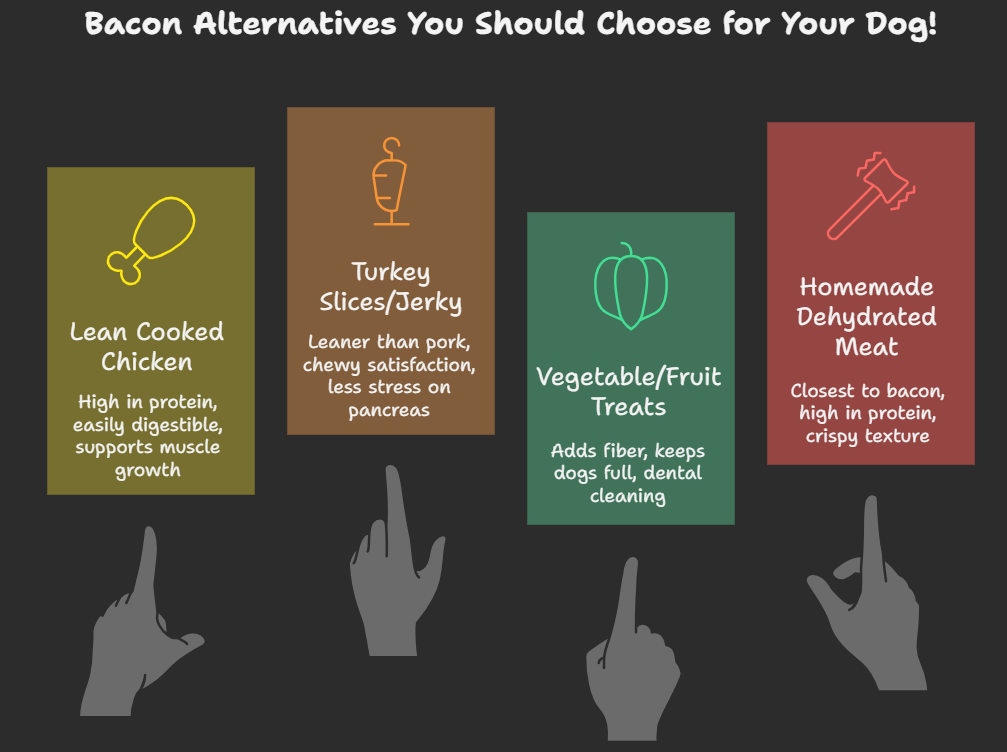
Some bacon alternatives that support the dog’s body rather than harming it are:
1. Lean Cooked Chicken as a Protein Rich Option
Boiled chicken without salt is one of the best treat options for dogs. It is easily digestible, rich in protein, and supports muscle growth while keeping fat levels controlled. Chicken can be diced into bite sized pieces and offered as training treats or meal toppers.
Dogs get the same level of excitement without the harmful effects of bacon. It is an ideal treat for dogs who are sensitive to digestive upset or underweight and need protein support.
2. Turkey Slices and Turkey Jerky Made for Dogs
Turkey is leaner than pork. When choosing turkey slices, ensure that they are made specifically for dogs, not processed sandwich meat from human stores. Dog specific turkey jerky is air dried with controlled fat and salt content.
It gives the same chewy satisfaction without putting stress on the pancreas.
3. Dog Safe Vegetable or Fruit Treats
Some dogs surprisingly enjoy crunchy vegetables or sweet fruits. Carrots, plain cucumber slices, and apple pieces make excellent snacks. They add fiber, keep dogs feeling full longer, and naturally help with dental cleaning.
When switching to healthy snacks, owners notice that dogs start begging less for human food because their bodies stay satisfied longer.
4. Homemade Dehydrated Meat Treats
Homemade treats are the closest alternative to bacon. Thinly cooked chicken or lean beef strips can be dehydrated in the oven at a low temperature until crispy. In addition, duck feet for dogs are also mighty effective as they are a rich source of protein.
These treats smell appealing to dogs and pack protein without the salt and fat overload. This method gives you complete control over ingredients and eliminates all preservatives.
Pet stores offer many products labeled as bacon flavored. Owners assume these are real bacon, but they are usually flavored using natural smoke essence and artificial seasoning. Even when marketed for dogs, some products contain unnecessary salt.
In a veterinary setting, when I advise dog parents to choose treats, I always suggest:
- Reading the ingredient list. The shorter the list, the better it is for the dog.
- Looking for words like no salt added, low fat, and single source protein ingredients.
Treats where meat is the first ingredient are far healthier than treats that list wheat or corn filler at the top. If you are uncertain, choose pure dehydrated meats because those do not require preservatives or salt.
My Personal Recommendation as a Veterinarian
I recommend prioritizing whole food protein treats. If the goal is to satisfy a dog’s craving for aroma, there are smoked chicken treats available that use a natural smoking process rather than artificial bacon seasoning.
Sometimes owners contact me after their dog has had bacon, and they notice that something feels off. Bacon can trigger a delayed reaction, so knowing the warning signs helps you act quickly.
If your dog starts vomiting repeatedly, refuses food, appears weak, or shows abdominal pain, do not wait for the condition to improve on its own. Some serious signs your dog may show after eating excessive bacon are:
- Abdominal pain
- Hunched back
- Drooling
- Diarrhea
- Vomiting
These may indicate pancreatitis or stomach irritation. Aggressive vomiting or blood in stool requires immediate medical care. I have seen dogs go from mild discomfort to critical condition within hours.
If symptoms persist, take your dog to a veterinary clinic as soon as possible.
Feeding bacon to your dog may seem harmless, but it comes with real health consequences. There is no nutritional benefit and several risks, including pancreatitis, kidney strain, salt toxicity, obesity, and long term metabolic problems.
Dogs enjoy bacon because of the strong aroma, not because their bodies need it. The good news is that there are many healthier alternatives, such as boiled chicken, turkey jerky made for dogs, vegetables, fruits, and homemade dehydrated meat treats.
If you ever feel tempted to share bacon, remember that one healthy decision today can prevent an emergency tomorrow. Your dog’s health is shaped by what you choose to feed. So, make choices that protect their health.
Can a single piece of bacon kill my dog?
While one small piece is rarely fatal, it can trigger acute pancreatitis or severe digestive upset, especially in small or sensitive breeds.
Is turkey bacon a safer alternative for dogs?
Turkey bacon is still highly processed and often contains high levels of sodium and preservatives, making it nearly as unhealthy as pork bacon.
What should I do if my dog accidentally eats a whole pack of bacon?
Monitor them closely for vomiting or abdominal pain and contact your veterinarian immediately, as the high salt and fat intake can lead to sodium poisoning or pancreatitis.
Are bacon-flavored dog treats safe to feed daily?
Most commercial bacon-flavored treats are safe in moderation, but you should check the label for artificial dyes and high salt content to ensure they are truly healthy.
Why is bacon more dangerous for puppies and senior dogs?
Puppies have developing organs and seniors have declining kidney function, making it much harder for their bodies to process the extreme salt and fat found in bacon.
