
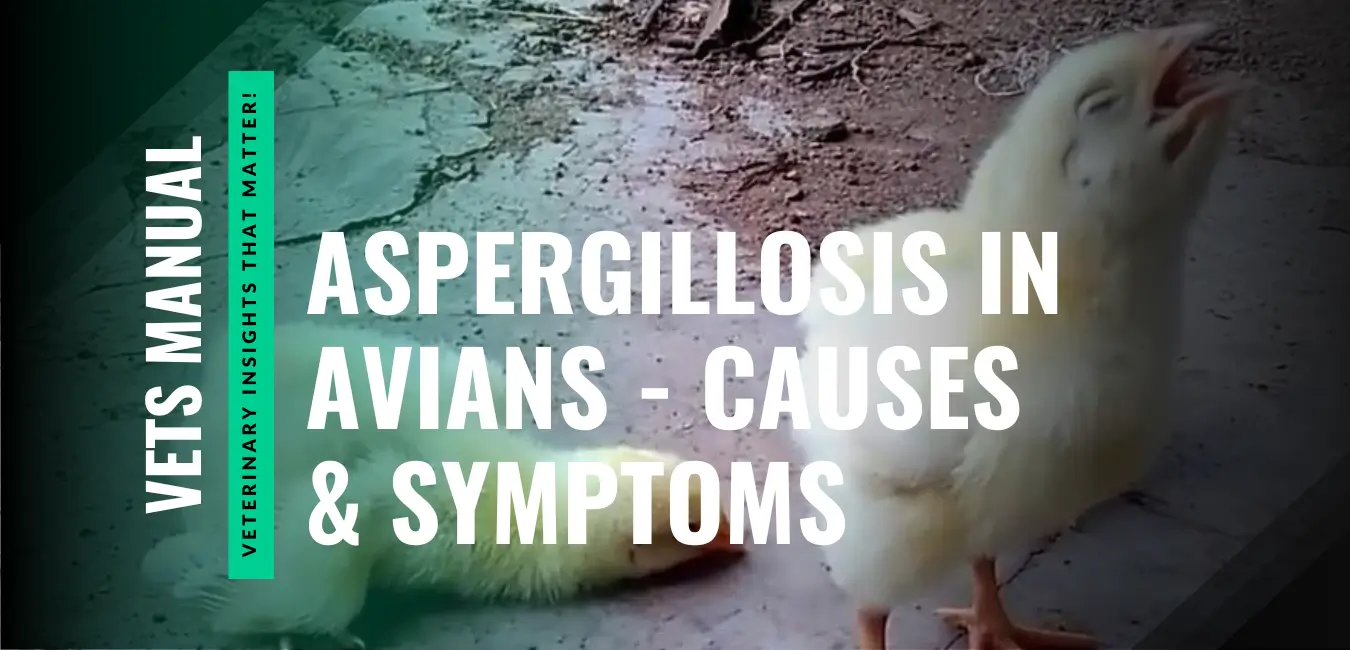
Aspergillosis, more commonly referred to as Brooder Pneumonia, is a fungal disease that primarily affects the respiratory system of the avian species. The disease particularly prevails in chickens, turkeys, and other birds. Additionally, wild and pet species can also get the infection. Aspergillosis in avians is one of the most critical concerns across the globe.
It poses a significant challenge because of its high morbidity and mortality rate. Specifically, the young birds of 7-40 days get severe infections. Additionally, immunocompromised animals become infected readily.
Wanna know the causes, symptoms, and treatment of Aspergillosis in birds? Let’s get into it.
Aspergillosis in avians is primarily caused by a fungal species, Aspergillus fumigatus. In addition, some other species are also known to cause this disease, which includes:
- Aspergillus flavus
- Aspergillus niger
- Rhizopus spp.
- Mucor spp.
- Penicillium spp.
These fungi are ubiquitous in the environment and usually thrive more in moist and warm conditions. The spores they produce are aerosolized easily and inhaled by birds. Other names of Aspergillosis in avians are Mycotic Pneumonia and Pneumomycosis.
Besides the causative agent, several predisposing factors are there that play a crucial role in causing aspergillosis in avians. I have enlisted them below.
1 – Environmental Conditions
- Poor ventilation and high humidity in aviaries, chicken coops, or poultry farms.
- Moldy bedding, feed, or litter that fosters fungal growth.
2 – Stress
- Overcrowding, transportation, or handling stress.
- Nutritional deficiencies and dehydration.
3 – Age Susceptibility
The most common predisposing factor of Aspergillosis in avians is age. Chicks and poults, which are aged between 7 to 40 days, are particularly vulnerable due to immature immune systems.
4 – Immune Compromise
Birds under prolonged antibiotic or corticosteroid treatments have compromised immune systems. Thus, they are highly vulnerable to aspergillosis.
So far, I have dealt with a few cases of Aspergillosis in Avians and found some clinical symptoms that confirmed its nature. Here, I have mentioned them.
Respiratory Symptoms
- Dyspnea (labored breathing) and open-mouth breathing.
- Fever, inappetence, and emaciation.
- Cyanosis (bluish discoloration of mucous membranes).
Neurological and Ocular Symptoms
- Neurological signs, including torticollis (twisting of the neck) and tremors, occur in rare cases.
- Mycotic keratitis: Large plaques in the medial canthus of the eye.
Pathological Findings
- Granulomas: Yellow or greenish nodules in the lungs, air sacs, and trachea.
- Plaques: Thick fungal plaques on respiratory mucosa.
- Dissemination to other organs, including the liver, intestines, and brain, in severe cases.
Aspergillosis in poultry is a recurring issue in some poultry farms that often lead to severe outbreaks in young birds. The primary causes involve high spore loads during the hatching process. Also, contaminated bedding and feed are other critical reasons.
The common signs of Aspergillus in poultry include respiratory distress and unthriftiness. In addition, the morbidity often remains underestimated until the processing reveals lesions such as airsacculitis.
Brooder Pneumonia
Brooder Pneumonia is a term commonly used for Aspergillosis in chicks. It is marked by a high mortality rate and can spread readily in poorly ventilated regions. Therefore, immediate intervention is necessary to eliminate it from the contaminated environment.
In chickens and turkeys, the lungs and air sacs are most frequently involved. Pulmonary lesions are characterized by white to yellow plaques and nodules. They range from a few millimeters to several centimeters in diameter. In rare cases, birds may present with diffuse pulmonary congestion only.
Granulomatous pneumonia with intralesional fungal hyphae and heterophilic infiltrates is commonly observed. Additionally, plaques and nodules may be found in the trachea, liver, intestines, and occasionally the brain.
An ocular form, seen as mycotic keratitis, presents with large plaques that can be expressed from the medial canthus. Morbidity in finishing flocks may go unnoticed until processing, where airsacculitis becomes a cause of postmortem condemnation in poultry intended for the food supply.
Being a veterinarian, I can state that the diagnosis of Aspergillosis in Avians is quite tricky. However, confirmatory tests can help in the final diagnosis.
Clinical and Gross Examination
- Observation of granulomas and plaques in respiratory tissues.
- Signs such as dyspnea, weight loss, and neurologic abnormalities.
Confirmatory Tests
- Histopathology: Identification of fungal hyphae and granulomatous inflammation.
- Fungal Culture: Growth of Aspergillus species from respiratory or tissue samples.
- Radiography and Endoscopy: Visualization of granulomas and plaques.
The treatment of Aspergillosis in avians is primarily not effective in advanced stages. Spontaneous recovery may occur if re-exposure to spores is prevented. Still, there are some key approaches that you can follow to minimize the infection.
Antifungal Medications
Some antifungal medications are found to be effective against Aspergillosis in avians. These include the following.
- Azoles: Itraconazole and voriconazole are preferred antifungal agents. They are administered orally or through nebulization.
- Amphotericin B: Used for severe cases, delivered intravenously or via nebulization.
Supportive Care
- Oxygen therapy for respiratory relief.
- High-energy diets and vitamin supplementation.
- Removal of birds from contaminated environments and replacing bedding or feed.
I have already mentioned that the treatment of Aspergillosis in avians is not that effective. The only way to get rid of them is through prevention strategies.
Environmental Management
- Regular cleaning and disinfection of coops, aviaries, and hatching equipment.
- Avoiding moldy feed and bedding.
- Proper ventilation to reduce humidity and spore aerosolization.
Egg Hygiene
- Avoid setting cracked or contaminated eggs for incubation, as fungal spores can spread through hatching machines.
- Fumigation of surfaces with fungicides like enilconazole to limit contamination.
Prophylactic Measures
- Prophylactic antifungal treatments or nebulization in high-risk environments.
- Regular monitoring for early signs of disease.
Recently, developments and advancements in the medical industry have set the direction to treat aspergillosis in avians.
DNase1 in Aspergillosis Treatment
DNase1 has shown promise in treating fungal infections in chickens by breaking down extracellular DNA in biofilms. As a result, it can potentially improve antifungal efficacy. While its use in avian medicine is still being studied, it represents a potential breakthrough in managing resistant cases of aspergillosis.
Genetic Studies
Advancements in genetic research are helping in the identification of avian species with increased susceptibility to fungal infections. These studies may pave the way for selective breeding programs aimed at reducing disease prevalence in poultry.
Vaccine Development
Although no vaccine currently exists for aspergillosis, ongoing research into fungal antigens offers hope for preventive immunization in high-risk avian populations.
Aspergillosis in avians remains one of the most challenging fungal diseases I encounter in both poultry and companion birds. Its impact on young and immunocompromised birds is especially severe, which is why early recognition and strict environmental management are so important.
When you learn the causes, symptoms, and diagnostic approach, you can respond quickly and protect your flock before the disease spreads. Although treatment can be difficult in advanced cases, prevention through proper hygiene, ventilation, and careful monitoring is highly effective.
With timely action and improved management practices, you can significantly reduce the risk of Aspergillosis in your birds.
